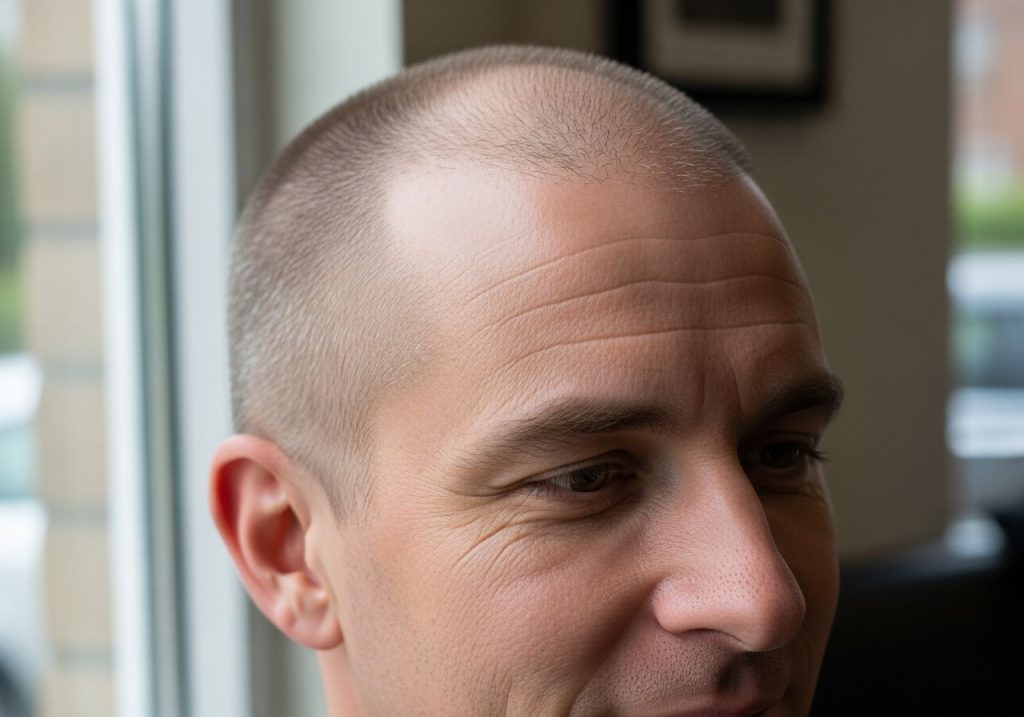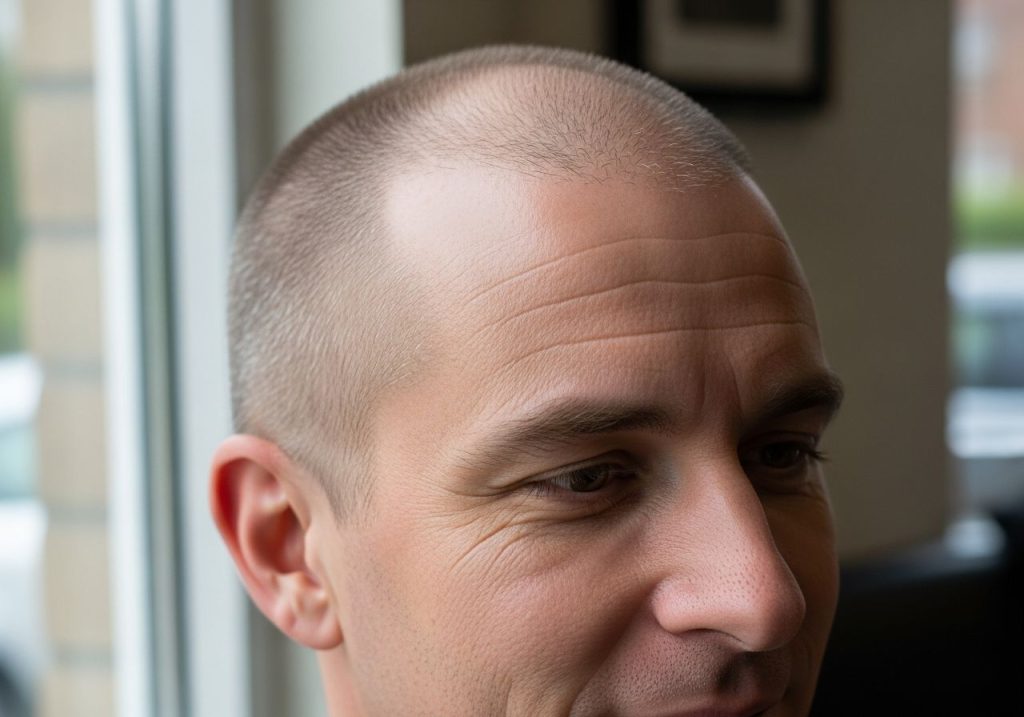
If you have a scar on your scalp, whether from a hair transplant, alopecia, or an old injury, you may be wondering whether SMP can cover it and what the process actually involves. This article explains how medical micropigmentation behaves in and around scar tissue, why it differs from standard hair replication, and what you should realistically expect in terms of session count, pigment retention, and the finished result.
Why scar tissue is a different environment for pigment
Healthy scalp skin has a consistent, layered structure that accepts and holds pigment predictably. Scar tissue does not. When skin is damaged, whether by a surgeon’s strip incision, follicular unit extraction, trauma, or an autoimmune condition such as alopecia areata, the body repairs itself with collagen fibres that are denser, less elastic, and arranged in a disorganised pattern compared to normal dermis.
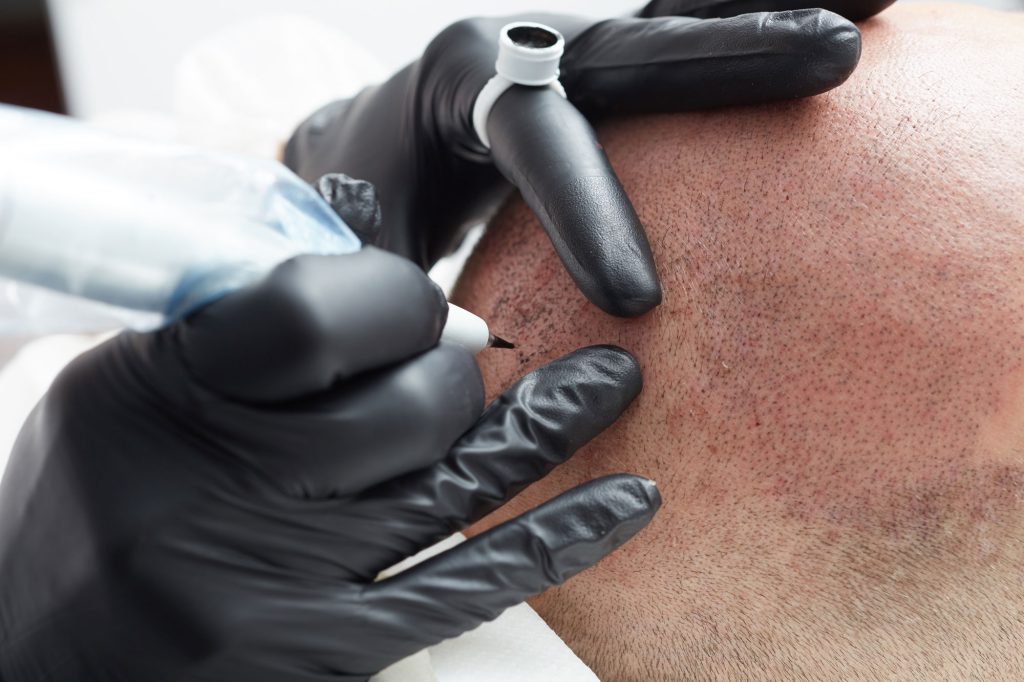
That structural difference matters enormously for SMP scar camouflage. The needle must negotiate tissue that can be either thicker and harder, or atrophic and sunken. In both cases, pigment deposition at the standard depth of 1.5 to 2 millimetres becomes less predictable. Dense fibrotic scars may resist needle penetration, causing pigment to sit inconsistently. Atrophic scars, which are recessed below the surrounding skin, can pull pigment outward as the tissue flexes, leading to what practitioners call pigment migration or blurring.
Sebaceous glands, which help anchor pigment in normal skin, are largely absent in mature scar tissue. Because these glands contribute to the skin’s ability to retain particles at the dermal level, their absence accelerates fading. This is the single most important reason that SMP over scar tissue almost always requires more sessions than standard hair replication over healthy scalp skin.
The three main scar types and what each one means for your treatment
Not all scalp scars respond the same way, and knowing which category yours falls into helps set accurate expectations before you book.
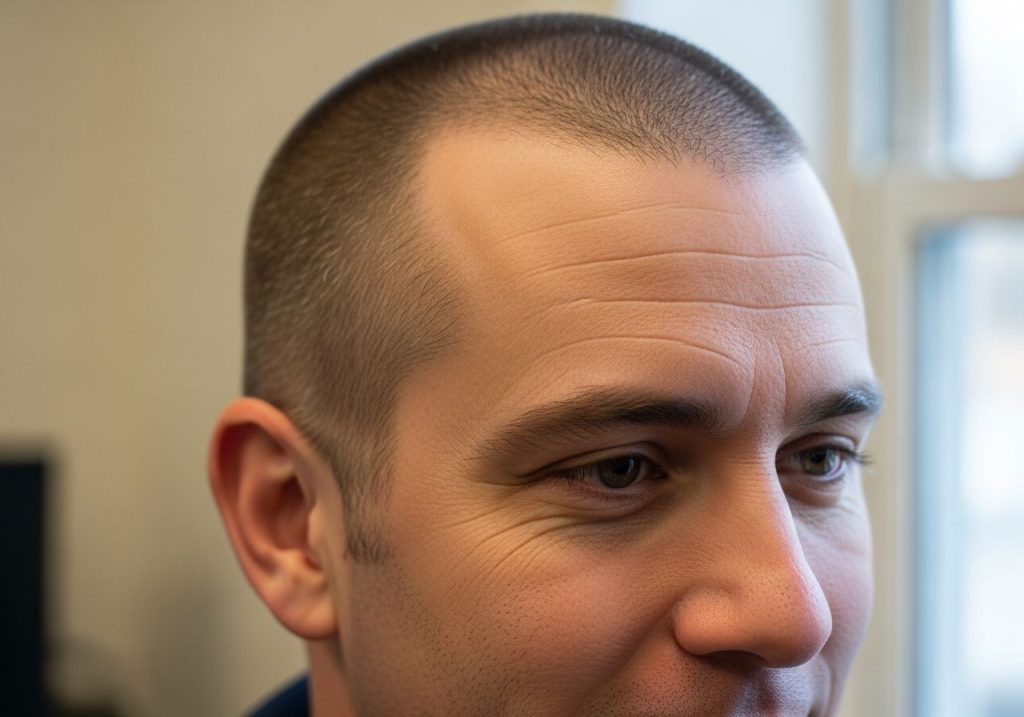
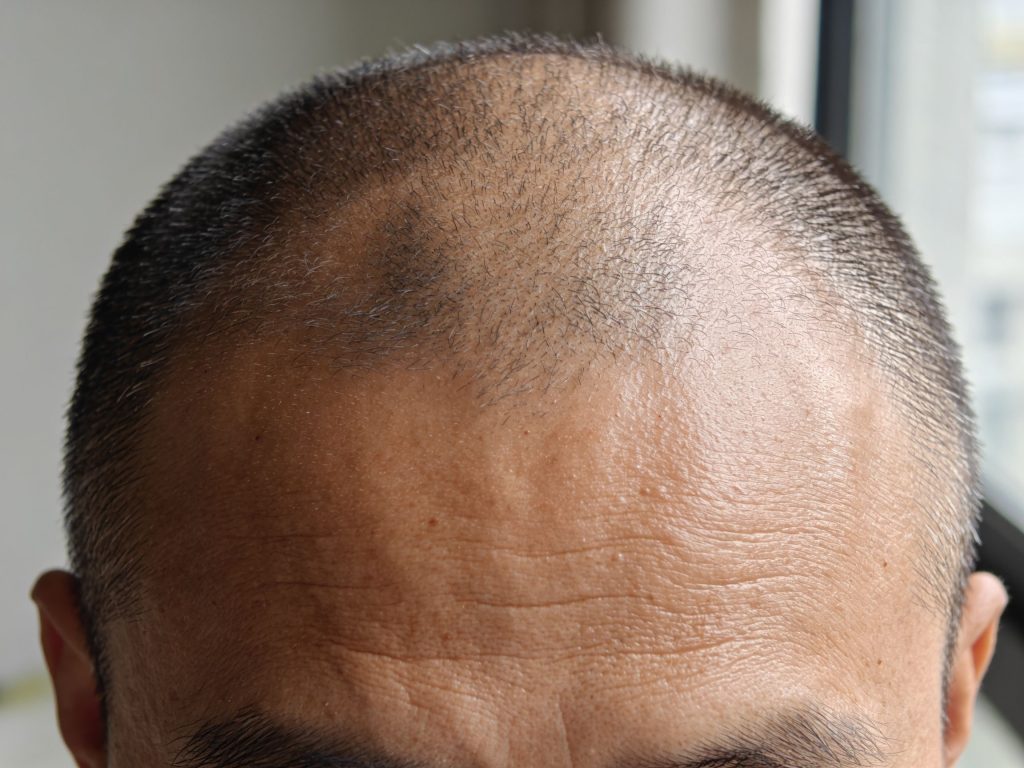
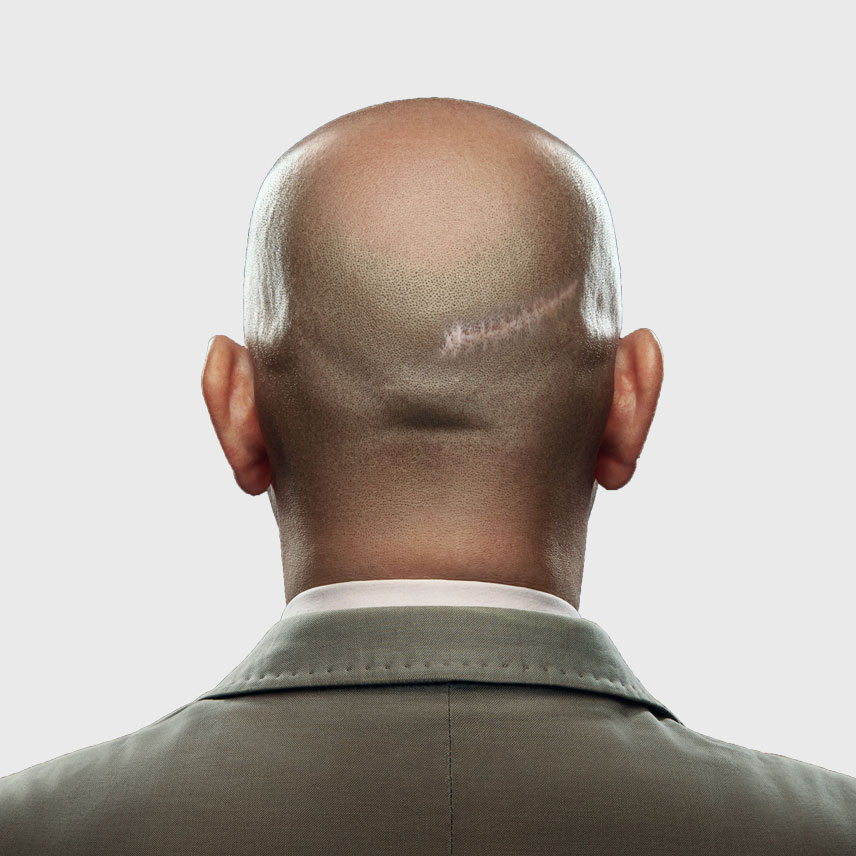
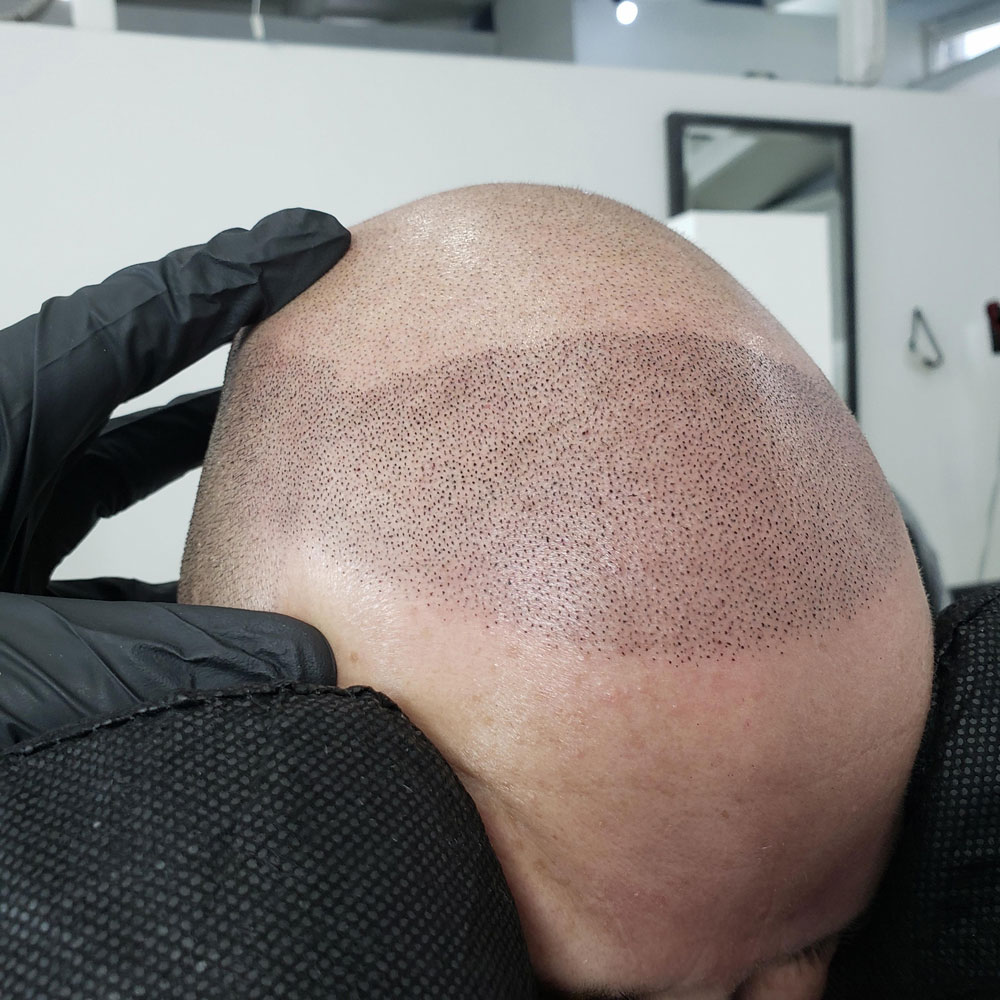
Hair transplant scars are among the most common reasons clients seek SMP scar camouflage. Strip surgery leaves a linear scar across the back of the scalp, typically pale, widened, and clearly visible when the head is shaved or the hair is cut short. Follicular unit extraction leaves scattered circular micro-scars that individually appear as small white dots. Both types are amenable to medical micropigmentation, but the linear strip scar tends to be more challenging because it often involves a range of scar textures within a single incision line. Pigment density is built up gradually across sessions, starting at the lower end of the 40 dots per cm² range, to avoid overworking already-compromised tissue.
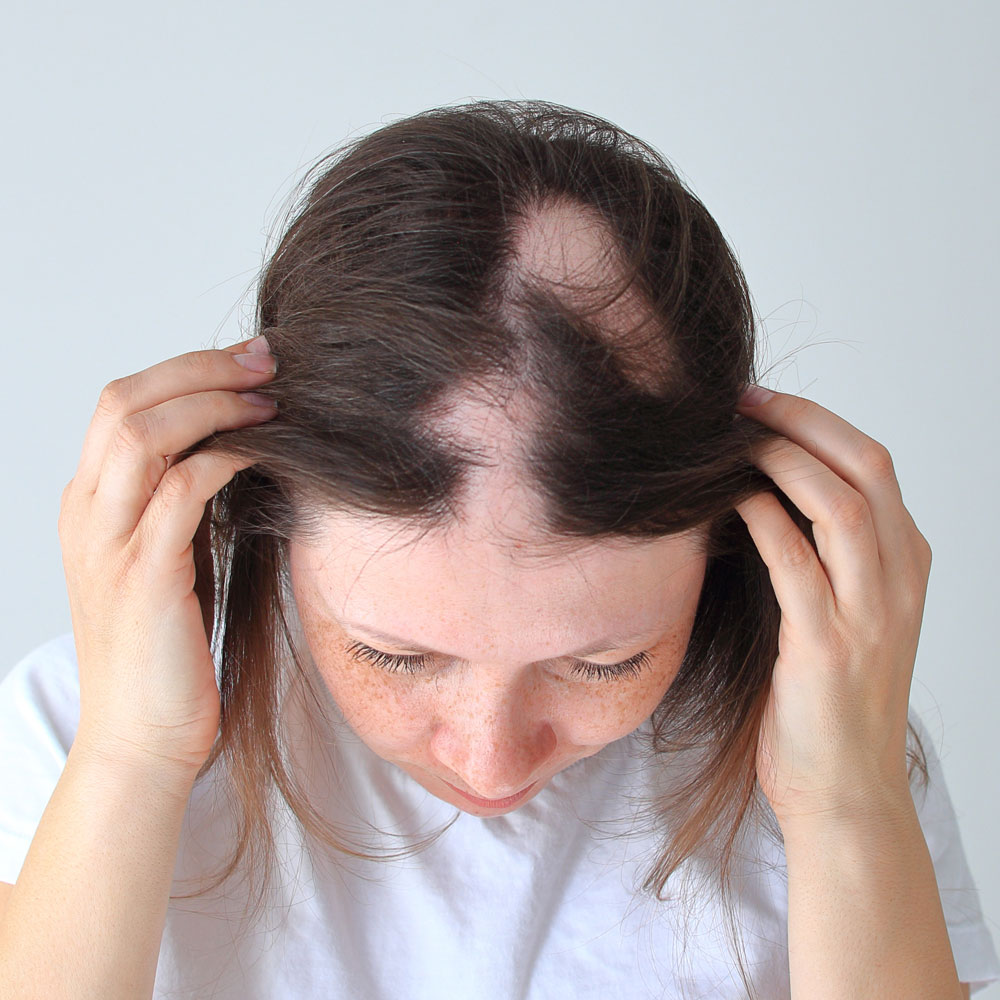
Alopecia scars, including those resulting from scarring alopecias such as lichen planopilaris or frontal fibrosing alopecia, present a specific challenge. The inflammation that drives these conditions can permanently destroy hair follicles and leave behind fibrotic tissue that holds pigment inconsistently. A 2025 case series confirmed that scarring alopecia cases show greater fading than androgenetic cases at six-month follow-up, which should be discussed openly with every client in this category before treatment begins. The aim is realistic density improvement and better visual blending, not a perfect match to unaffected scalp.
Injury and surgical scars from accidents, scalp surgeries, or previous cosmetic procedures vary widely in depth, texture, and colour. Raised keloid or hypertrophic scars are a contraindication for SMP, as needle stimulation can aggravate keloid-prone tissue. If you have a history of keloid formation, this must be discussed before any pigment is deposited. Flat or atrophic injury scars, by contrast, are often excellent candidates, particularly when the goal is to blend the pale or discoloured area with the surrounding scalp tone using carefully matched pigment.
Session count, pigment retention, and what healing looks like
Standard SMP for hair loss typically requires two to four sessions. Scar tissue usually pushes that number towards the higher end, and in some cases beyond it. The reason is straightforward: because pigment retention is reduced in fibrotic tissue, each session deposits less usable pigment than it would in healthy dermis. Building density progressively, from around 40 dots per cm² in early sessions up to 80 to 100 dots per cm² in final sessions, is the only safe way to approach scar tissue without overworking it or causing further trauma.
Healing timelines also require longer assessment periods. Initial redness typically subsides within two to three days, and the pigment will appear darker immediately after treatment before settling over the following two to four weeks. Because scar tissue lacks normal epidermal architecture, a full 30 days between sessions on scarred areas is advisable. Rushing the process is one of the most common mistakes in SMP scar camouflage, and it leads to poor results that are difficult to correct.
Aftercare follows the same principles as standard SMP but with additional care around the scar site. For the first four days: no water on the scalp, no shampoo, no sweating, and no shaving over the treated area. From days five to ten: gentle washing only, with strict sun avoidance. From day ten onwards, daily application of SPF 30 to 50 on the scalp is essential. Sun exposure is the single biggest accelerator of pigment fading in scar tissue, because without the sebaceous gland activity that helps anchor pigment, UV damage breaks down the deposited colour far more quickly than it would in normal skin.
Touch-ups are typically needed every three to five years, though clients with scar tissue on the scalp may find they return closer to the three-year mark. At follow-up appointments, density is assessed visually to determine whether a single maintenance session restores the result or whether more targeted work is needed around the scar borders.
Choosing the right practitioner for scar work
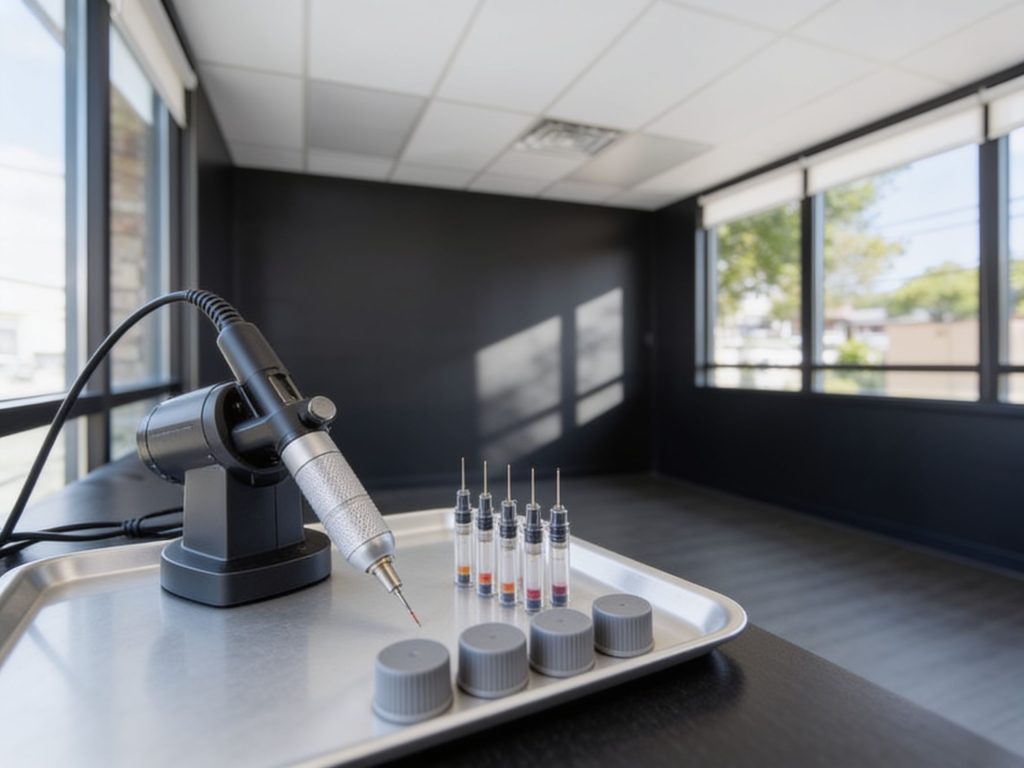
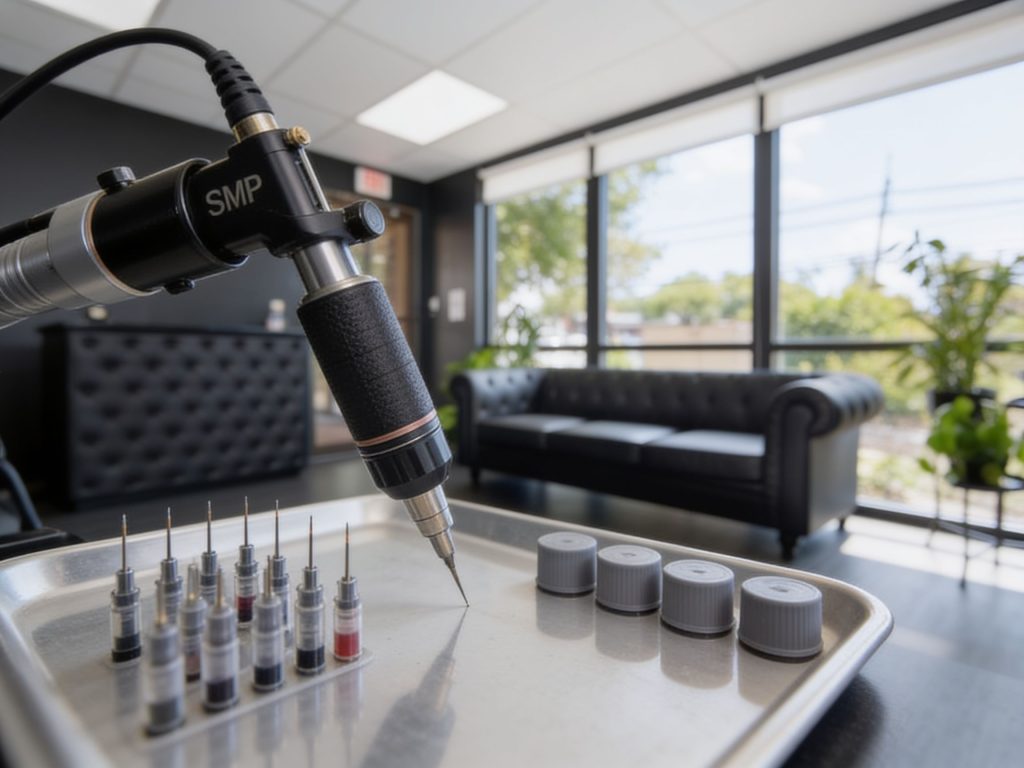
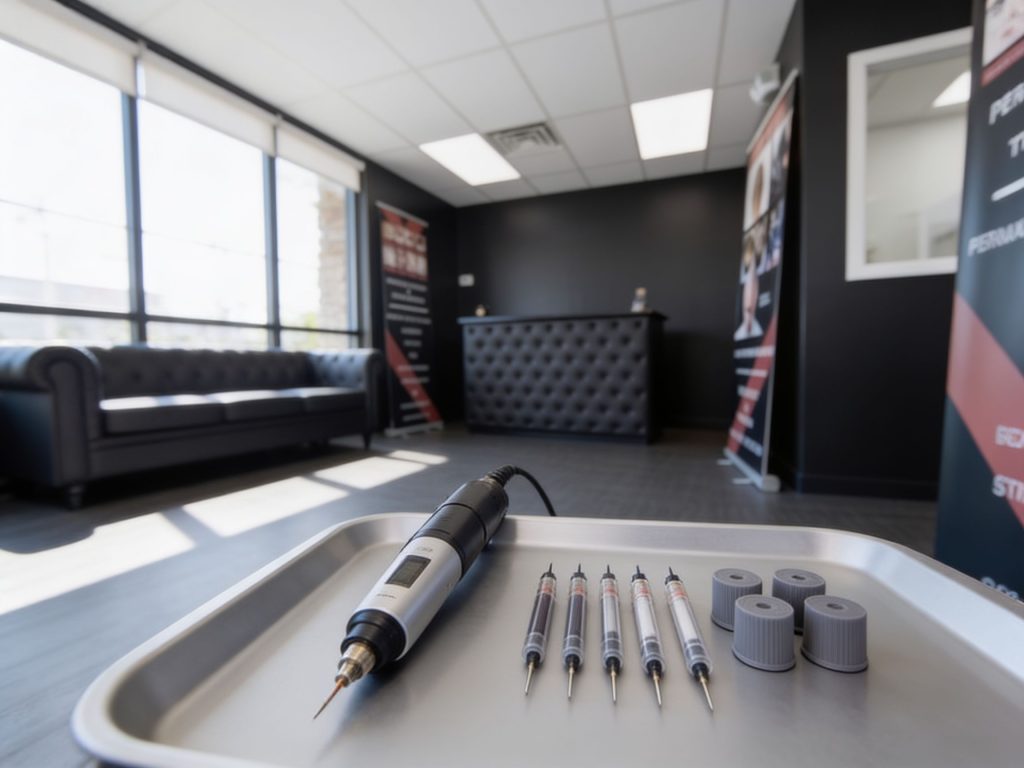
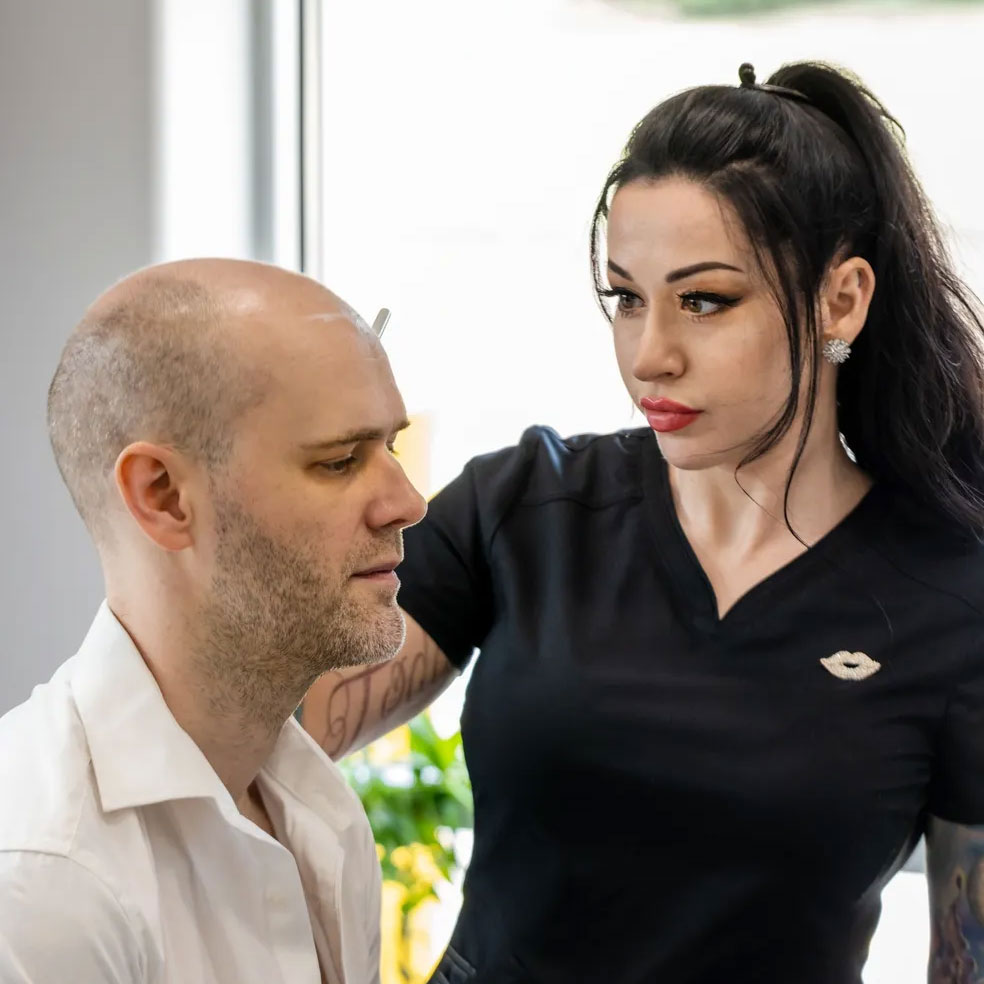
SMP over scar tissue requires a different skill set from SMP over healthy scalp. Needle selection alone demands specific knowledge: a 0.2 mm single-point needle for precise hairline border work and a 0.25 mm triple-point needle for broader coverage areas, though these choices shift when the underlying tissue has altered density and resistance. A practitioner who has only worked on straightforward hair loss cases may not have encountered the range of scar presentations that require adaptive technique.
In the United States, there is no universal licensure specifically for SMP, which means the responsibility of vetting falls entirely on the client. Look for practitioners holding a body artist licence, bloodborne pathogens certification, and registration with the American Academy of Micropigmentation. Experience benchmarks matter too: practitioners with fewer than 500 completed treatments are still building foundational competence, and scar work demands more than that foundation.
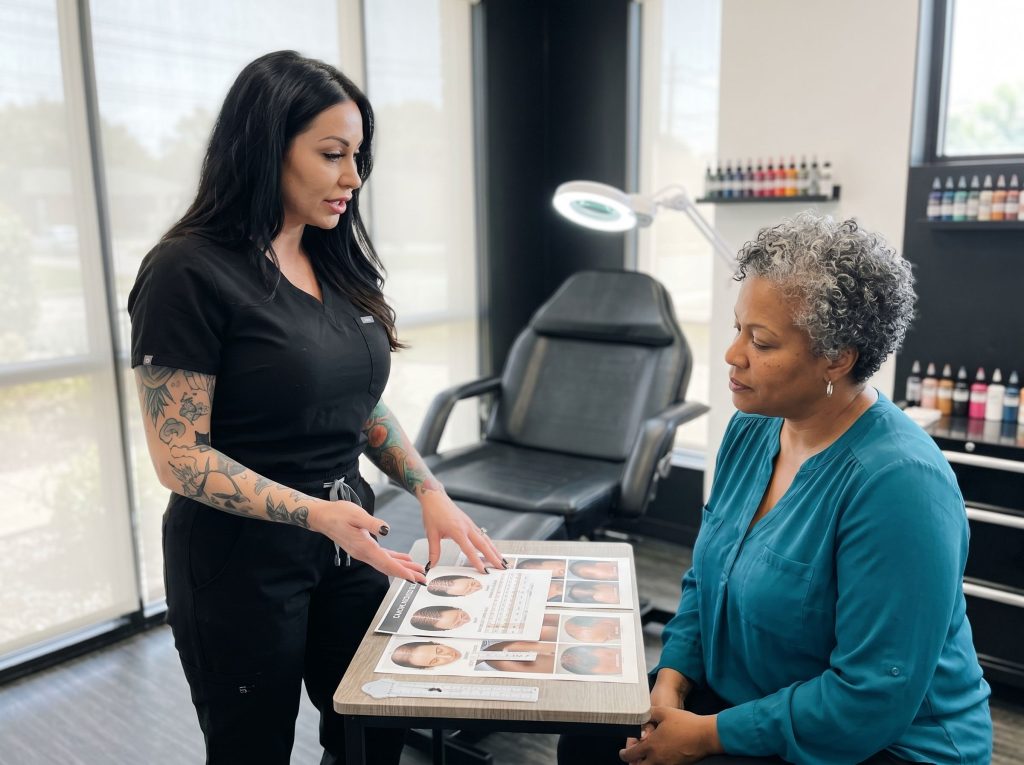
During a consultation, ask directly how many scar cases the practitioner has completed, what types of scars they have treated, and whether they can show healed results specifically from scar tissue treatments rather than standard alopecia cases. A confident, experienced practitioner will answer all three questions without hesitation.
Frequently Asked Questions
Can SMP fully hide a hair transplant scar?
SMP scar camouflage significantly reduces the visibility of hair transplant scars, both linear strip scars and FUE micro-scars, but the goal is blending rather than total elimination. Most clients achieve results that make the scar undetectable at normal social distances, particularly with a shaved or closely cropped hairstyle.
How many sessions will I need for SMP scar camouflage?
Most scar camouflage cases require three to five sessions, more than the two to four typical for standard hair replication. Scar tissue retains pigment less efficiently than healthy scalp skin, so density needs to be built gradually across multiple appointments spaced at least 30 days apart to allow proper healing and accurate assessment.
Does SMP on scar tissue hurt more than on healthy scalp?
Sensitivity varies depending on the scar type. Dense fibrotic scars are often less sensitive than the surrounding skin because nerve endings are disrupted during healing. Atrophic or thin scars can feel more sensitive. Most clients describe the sensation as mild discomfort rather than pain, and sessions on scar tissue are generally no harder to tolerate than standard SMP.
Is SMP safe for alopecia scars specifically?
SMP is suitable for most alopecia-related scarring, including patches from alopecia areata and the fibrotic tissue left by scarring alopecias. However, active inflammation is a contraindication, and treatment should only begin once the condition is stable. Scarring alopecia cases also tend to fade faster than androgenetic cases, meaning touch-up appointments may be needed sooner.
How do I find a qualified SMP practitioner near me for scar treatment?
When searching for a local SMP practitioner, prioritise those registered with the American Academy of Micropigmentation who hold a body artist licence and bloodborne pathogens certification. Ask specifically about their scar case history and request healed result photographs from scar treatments. Experience with scar tissue specifically, rather than standard hair loss alone, is the most important factor in achieving a good outcome.