
You’ve got a scar on your scalp, whether from a hair transplant, an old injury, or surgery, and you want to know if it can actually disappear into your hairstyle rather than announce itself every time the light hits it. This article explains exactly how pigment behaves in scar tissue versus normal scalp skin, and what a healed result realistically looks like. By the end, you’ll know what to expect from the process and how to judge whether a practitioner is doing it properly.
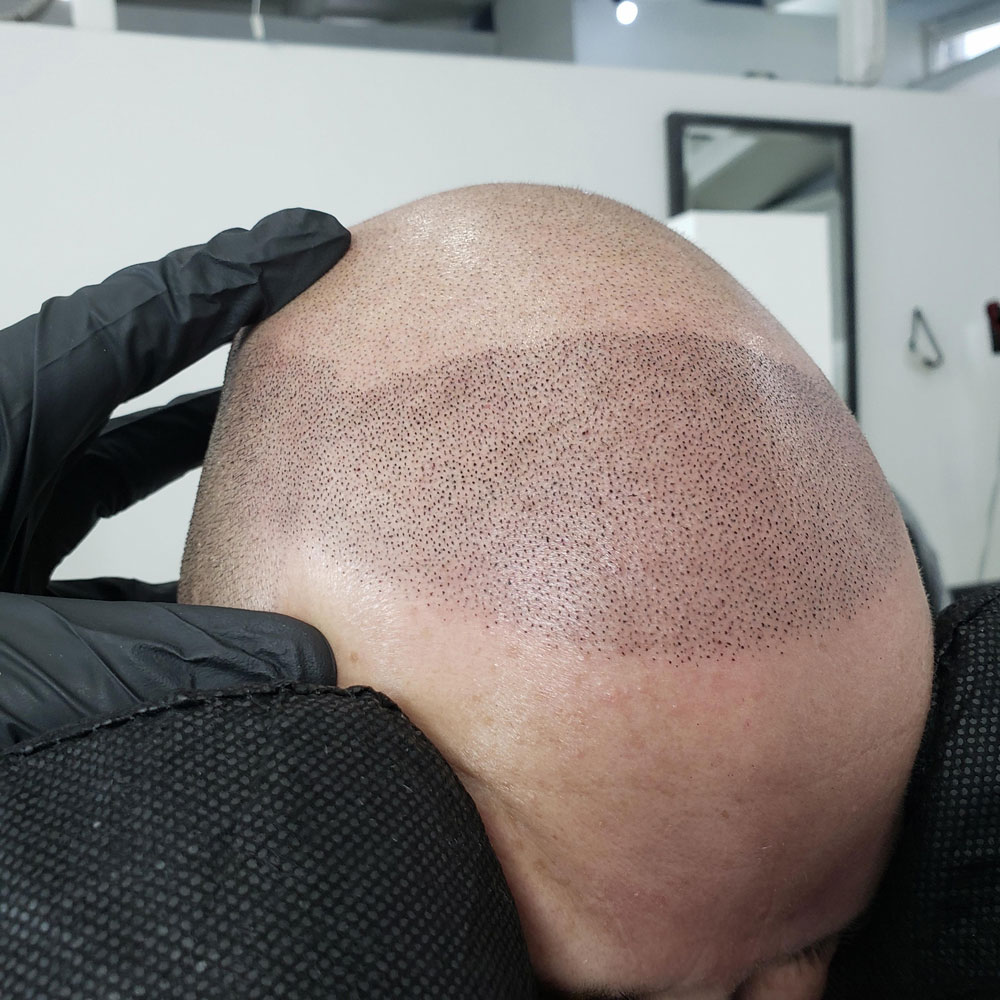
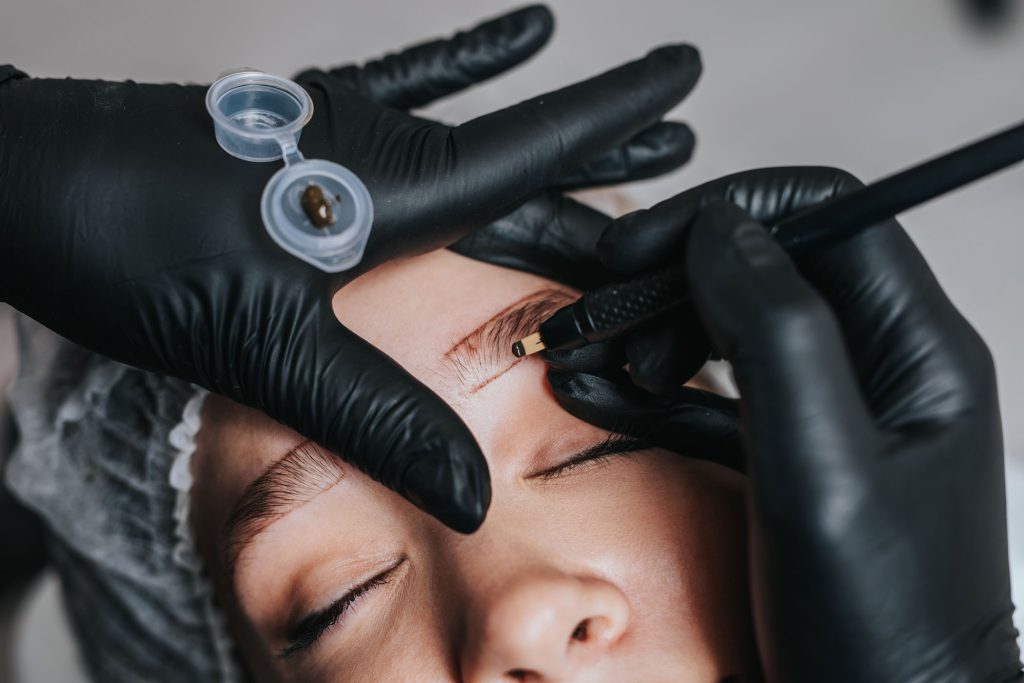
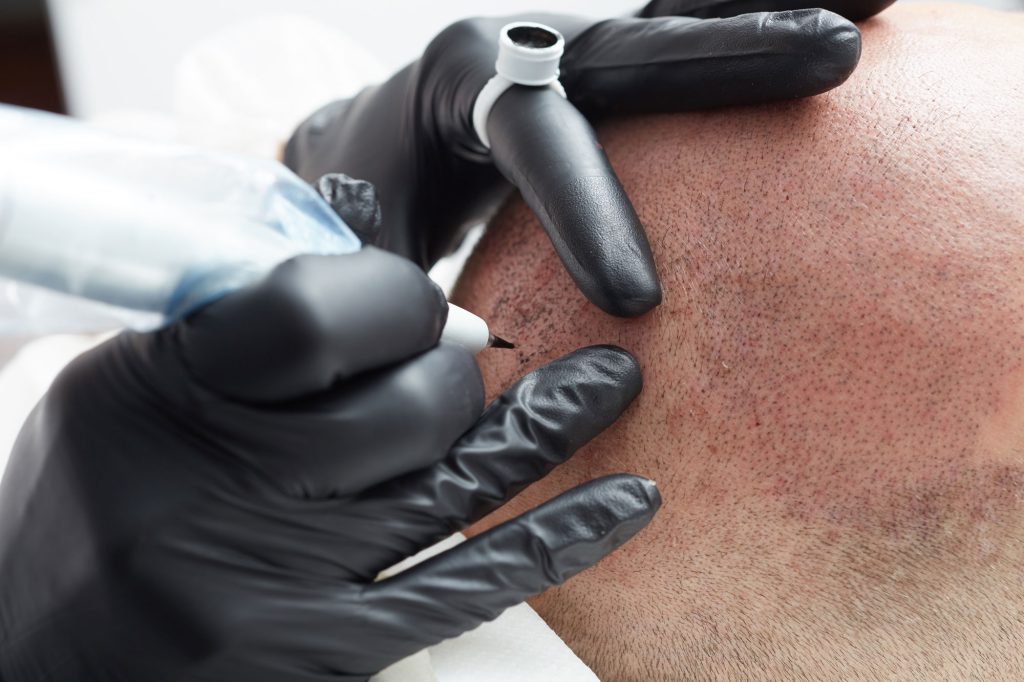
Scalp micropigmentation for scar coverage works by depositing medical-grade pigment into and around the scarred area so the tone matches the surrounding scalp and, where there’s still some hair, mimics the look of shaved follicles across the scar itself. It’s a camouflage technique, not a treatment that regrows hair or repairs skin. The scar stays exactly as it is structurally; what changes is how visible it is.
Why scar tissue takes pigment differently to healthy skin
Normal scalp skin has a fairly uniform structure: an epidermis, a dermis with active blood supply, and follicles running through it. Pigment deposited at 1.5 to 2 millimetres, sitting at the epidermal-upper dermal interface, has consistent tissue to bind to, which is why healthy skin typically produces even, predictable retention.
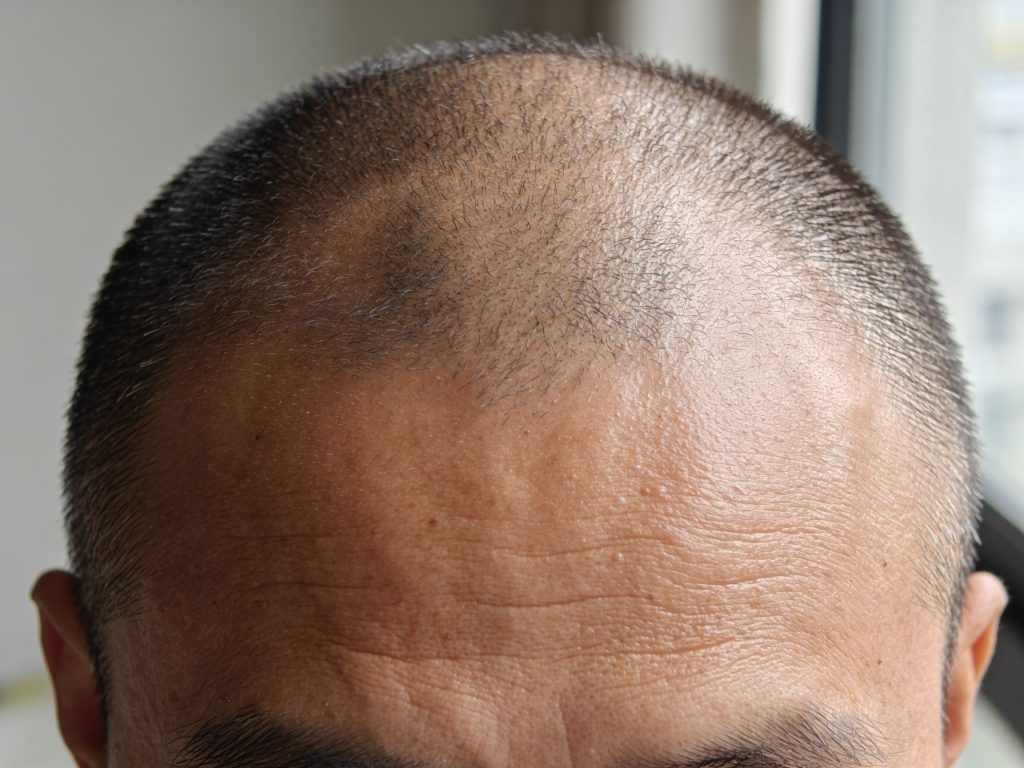
Scar tissue is different. It’s collagen-dense, has a reduced blood supply, and often sits slightly raised, indented, or shinier than the skin around it. That altered structure means pigment doesn’t always settle the same way. Retention in scar tissue tends to be patchier and can fade faster in places, particularly in the centre of wider FUT strip scars where blood flow is weakest.
This is why a case series from the Second Affiliated Hospital of Chongqing Medical University (2025) found that scarring alopecia cases showed noticeably more fading at six months than standard androgenetic cases, even though both started with similar visual density scores immediately after treatment. It’s not a flaw in the technique; it’s a known characteristic of how scar tissue absorbs and holds pigment long term.
How FUT strip scars, FUE punch scars, and injury scars are each treated
Not all scars are approached the same way, because the tissue itself behaves differently depending on how it was formed.
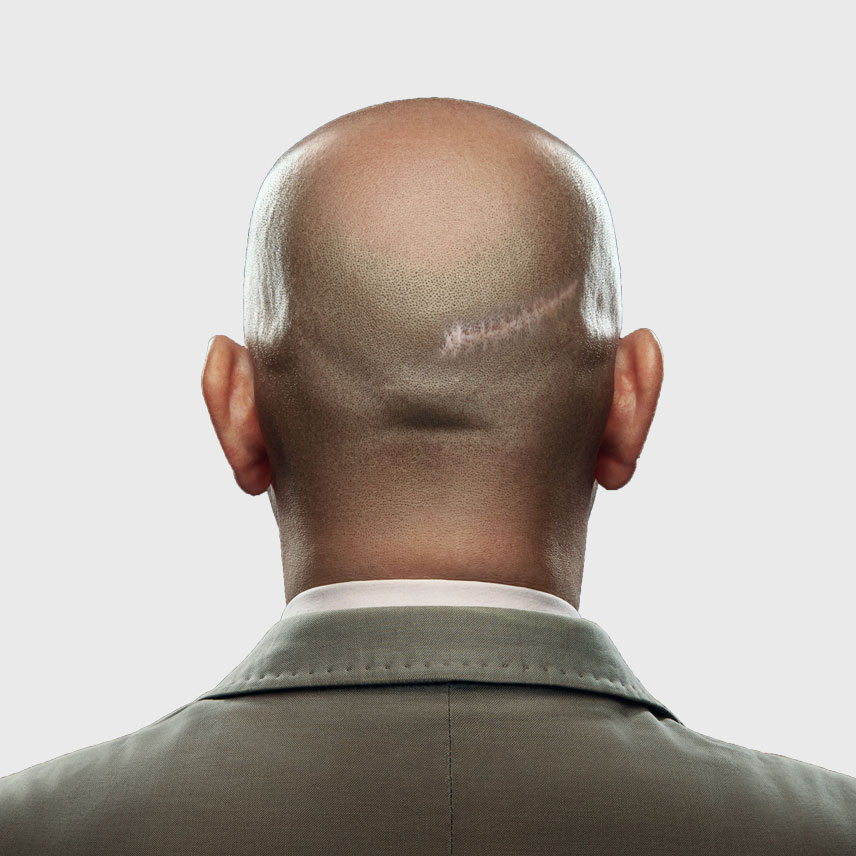
FUT strip scars run as a single linear line, usually across the back of the head, left from strip harvesting during a hair transplant. These typically need pigment worked in gradually across the scar and blended outward into the surrounding hair, using a lower dot density inside the scar itself to avoid it reading as a solid, unnaturally dark stripe.
FUE punch scars are small, round, and scattered, from individual follicle extraction. They’re often easier to disguise because they’re tiny, but there can be dozens or hundreds across a donor area, so the work is about consistent, even coverage rather than concealing one obvious mark.
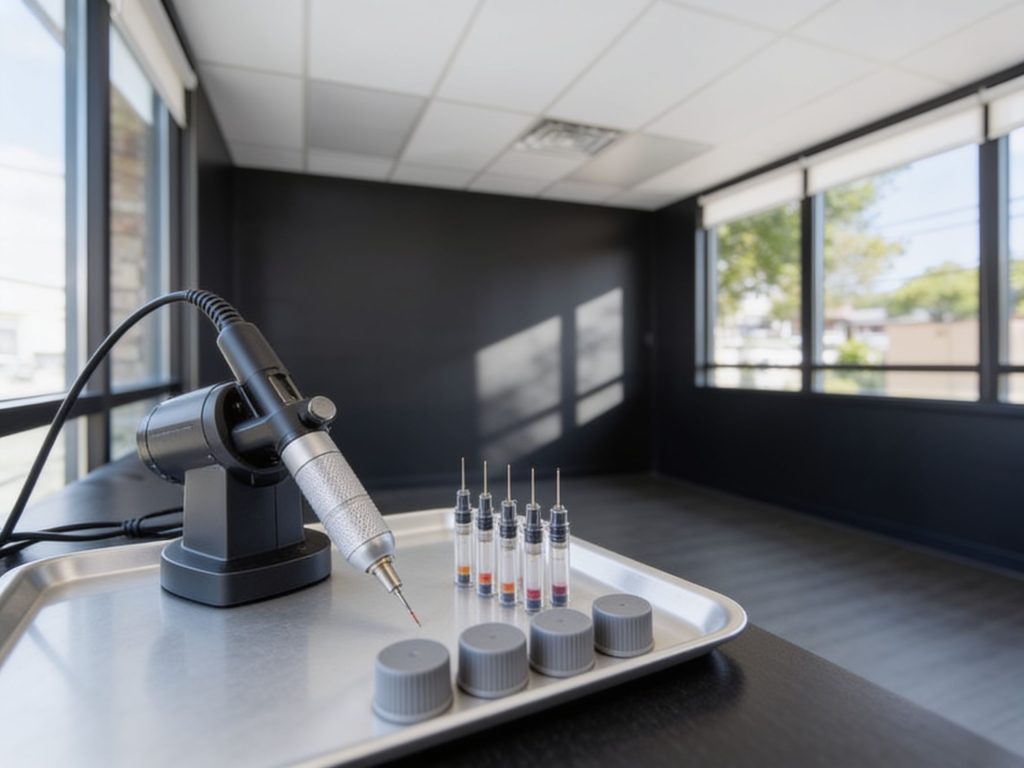
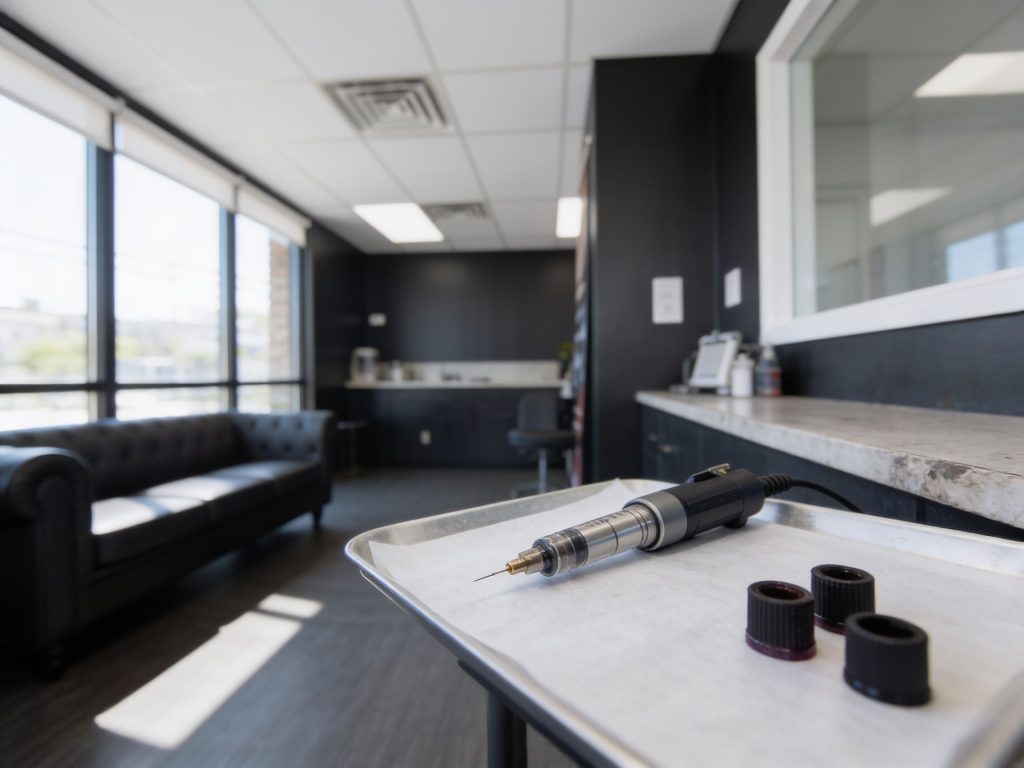
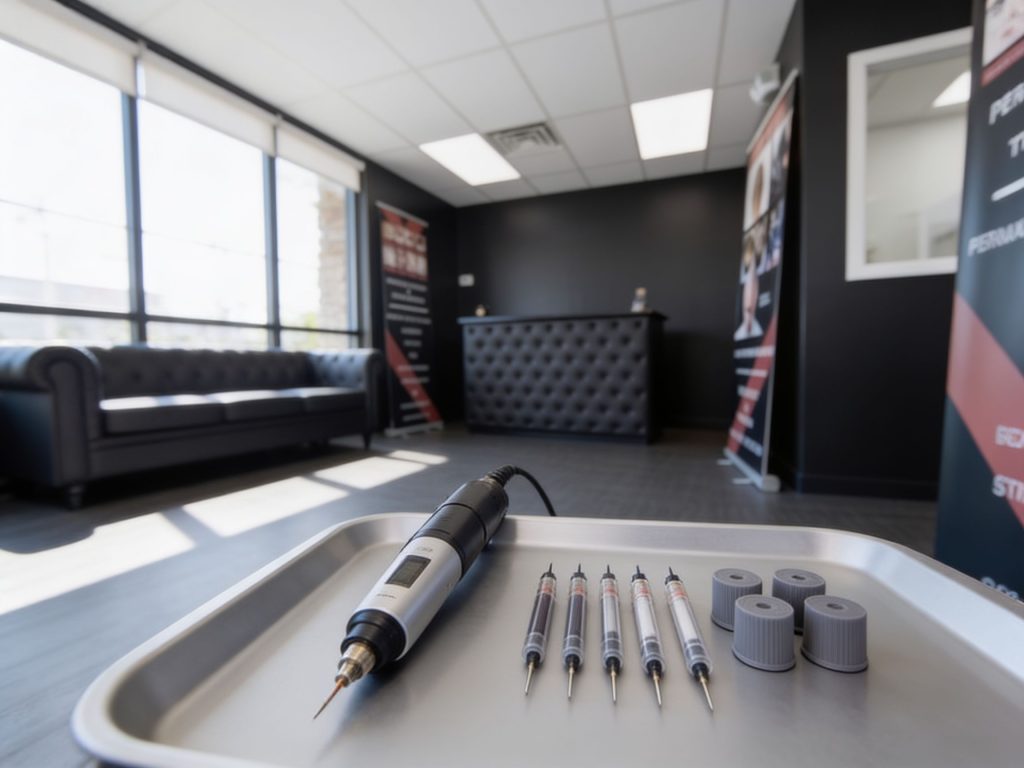
Injury and surgical scars vary enormously in shape and skin texture, so the practitioner needs to assess each one individually. A 0.2 millimetre single-point needle is generally used for finer border work along a scar’s edge, while a 0.25 millimetre triple-point needle handles broader density work in surrounding areas. Getting that transition right, from scar edge into normal follicle simulation, is what separates a natural result from one that looks like a patch job.
What a healed result over scar tissue actually looks like
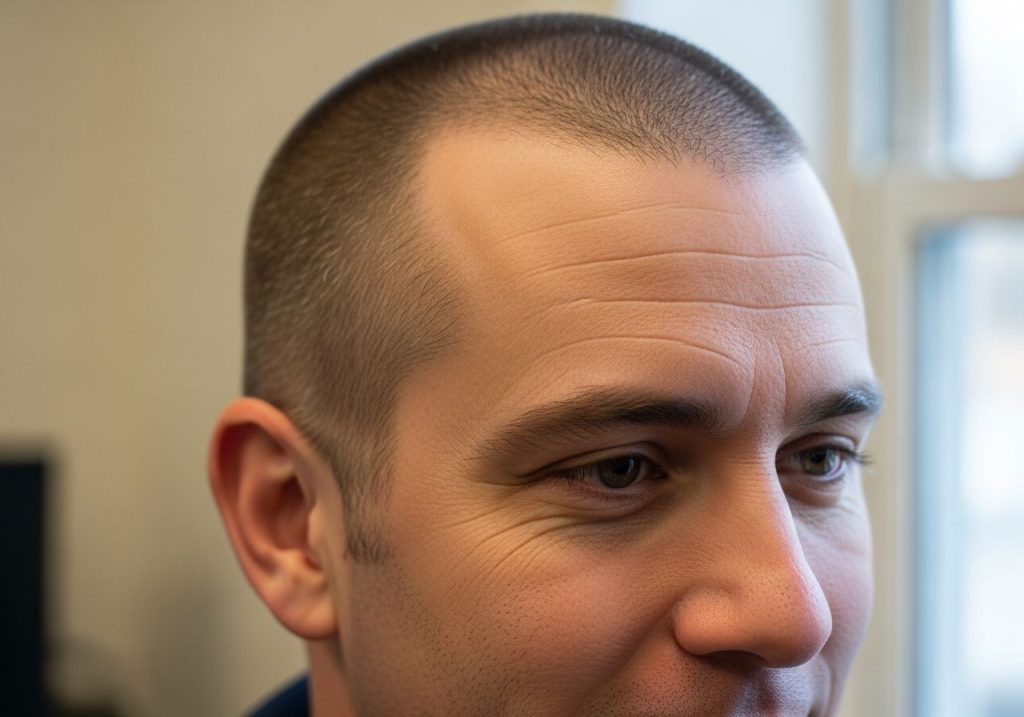
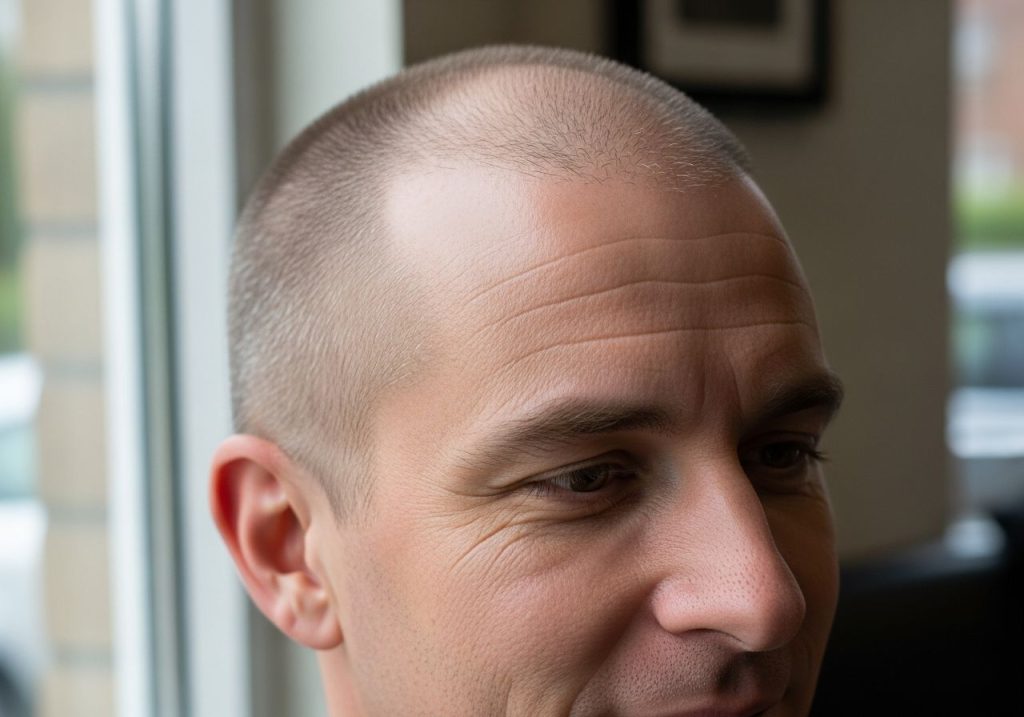
Be realistic about the outcome you’re working towards. Healed scar camouflage should reduce the contrast between the scar and your scalp, so it’s far less noticeable at conversation distance and under normal lighting, not invisible under a bright bathroom mirror at close range.
Most scars need two to four sessions, sometimes an extra one beyond what a non-scarred hair loss case would need, because that first pass often reveals which parts of the scar are taking pigment well and which need reinforcement. Sessions run one to five hours depending on the size of the area, with dot density built up progressively, starting around 40 dots per square centimetre and increasing to 80 to 100 dots per square centimetre by the final session.
Expect visible redness for two to three days after each session, with full healing taking around a month. During days one to four, keep water off the scalp entirely: no shampoo, no sweating, no shaving. From day five to ten, you can wash gently but should avoid sun exposure. After day ten, SPF becomes part of your routine, and you can resume normal grooming, though swimming pools are off-limits for a full 28 days. Skipping this timeline is one of the most common reasons scar work fades unevenly.
On longevity, expect results over scar tissue to hold for roughly four to six years before a touch-up is needed, sometimes shorter than the four to eight years typical of pigment on healthy scalp skin, given the reduced blood supply scars often have. Regular SPF 30 to 50 on the area afterwards meaningfully slows fading, since sun exposure is one of the biggest accelerants of pigment breakdown in both scarred and unscarred skin. Total cost is usually broken down per session rather than as one flat figure, and you should ask any practitioner exactly how many sessions your specific scar is likely to need before booking.
If you’re also considering hair transplant scar concealment SMP alongside a future transplant, or you’re comparing it to further surgical revision, it’s worth discussing timing with whoever is doing your transplant work first. Pigment sits at a different depth to transplanted grafts, but sequencing still matters for the cleanest final result.
Frequently Asked Questions
Can scalp micropigmentation cover a hair transplant scar completely?
It can significantly reduce visibility by blending pigment into and around the scar so it matches surrounding follicles, but scar tissue absorbs pigment less evenly than healthy skin. Most linear FUT scars need two to four sessions, and some residual texture or slight colour variation may still be visible up close.
Does SMP scar camouflage work on FUE punch scars too?
Yes, FUE punch scars often camouflage well because they’re small and round rather than one long line. The main challenge is consistency across potentially hundreds of tiny scars in the donor area, which requires even pigment density rather than concealing a single large mark.
Why does pigment fade faster on scar tissue than normal scalp skin?
Scar tissue has reduced blood supply and a denser, less uniform collagen structure than healthy skin, so pigment doesn’t settle or retain as predictably. This typically means scar camouflage results last four to six years compared with four to eight years on unscarred scalp.
How many sessions does scar coverage with SMP usually need?
Most scars require two to four sessions, sometimes one more than typical hair loss cases, because the first session often reveals which parts of the scar hold pigment unevenly. Each session runs one to five hours depending on the scar’s size and location.
Is scalp micropigmentation a good option for injury or burn scars, not just transplant scars?
Yes, SMP camouflage works on injury, burn, and surgical scars, not only transplant scars, provided the skin is healed and free from active irritation. Each scar is assessed individually since texture and shape vary far more than with standardised transplant scarring.
Ready to talk it through?
Rebel Aesthetic in Philadelphia offers a personal consultation to answer your questions and recommend the right approach for you. Get in touch with Rebel Aesthetic to book your consultation.