You have decided the shaved look is right for you, and you want to know exactly what you are committing to before you book. How many sessions does it actually take? What happens in each one? And why cannot the whole thing be finished in a single appointment? This article answers all three questions, so you walk in knowing what to expect at every stage.
Why the shaved head result cannot be completed in one visit
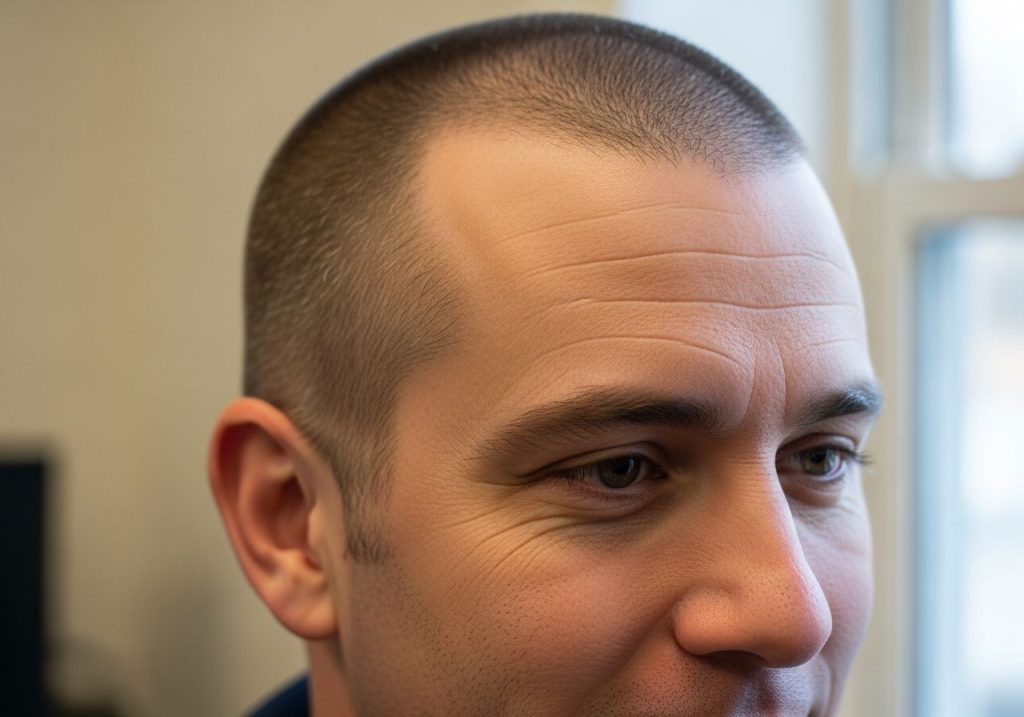
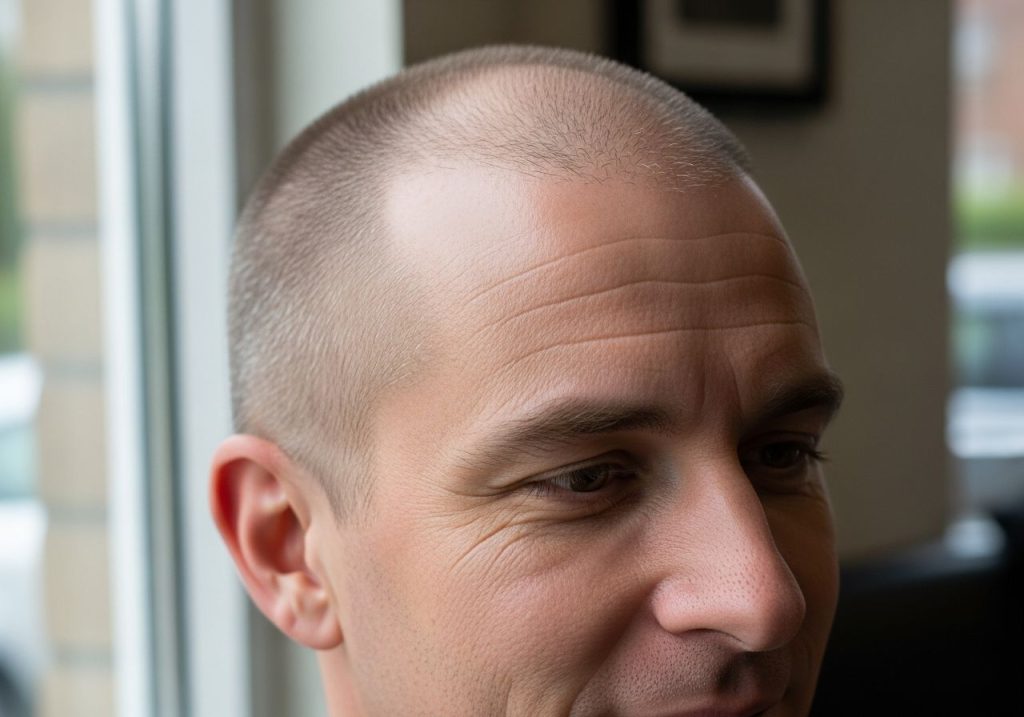
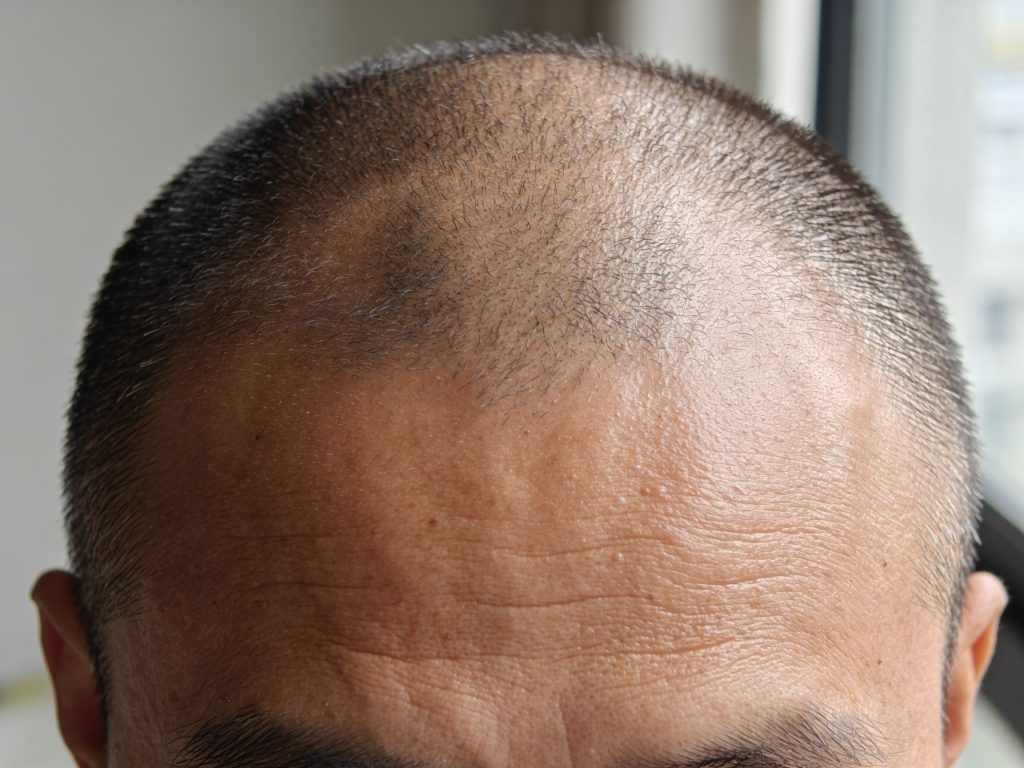
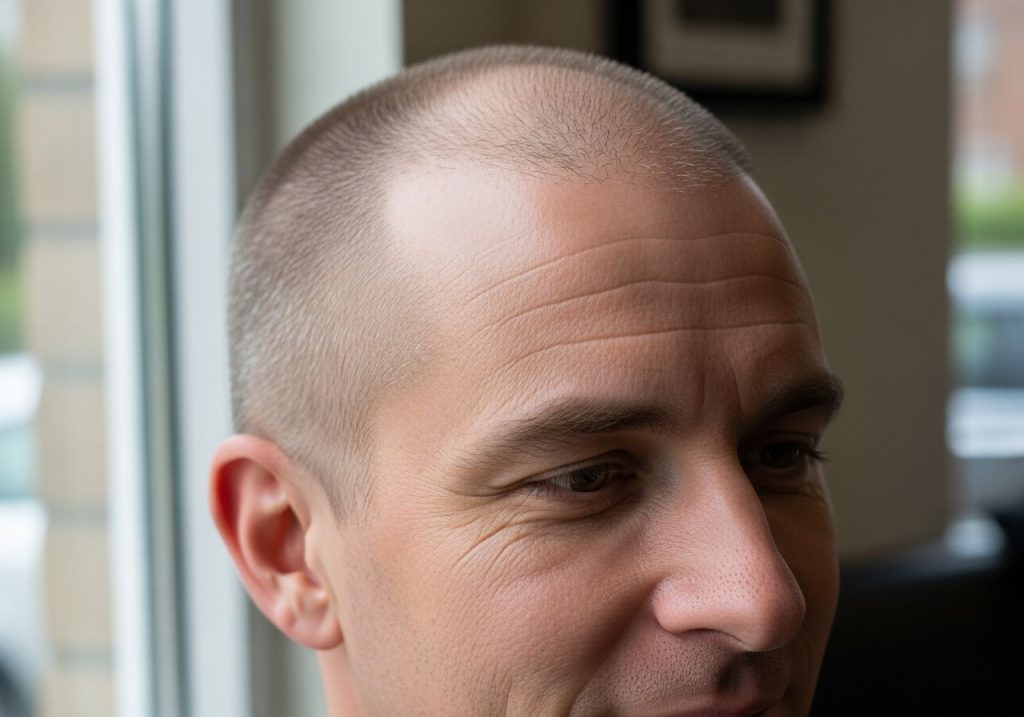
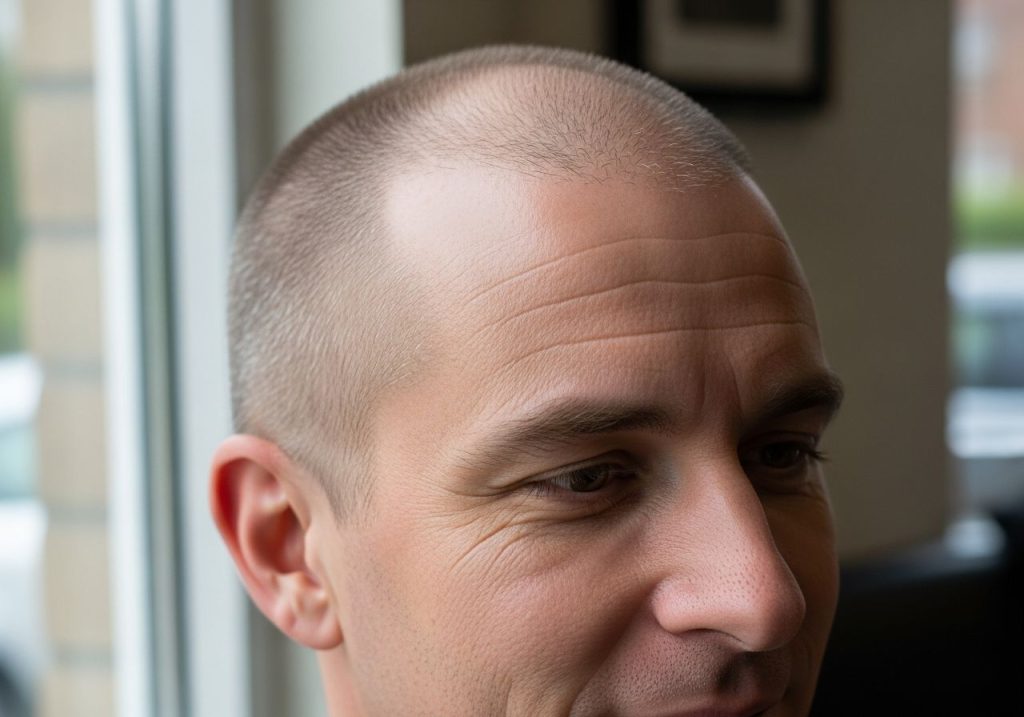
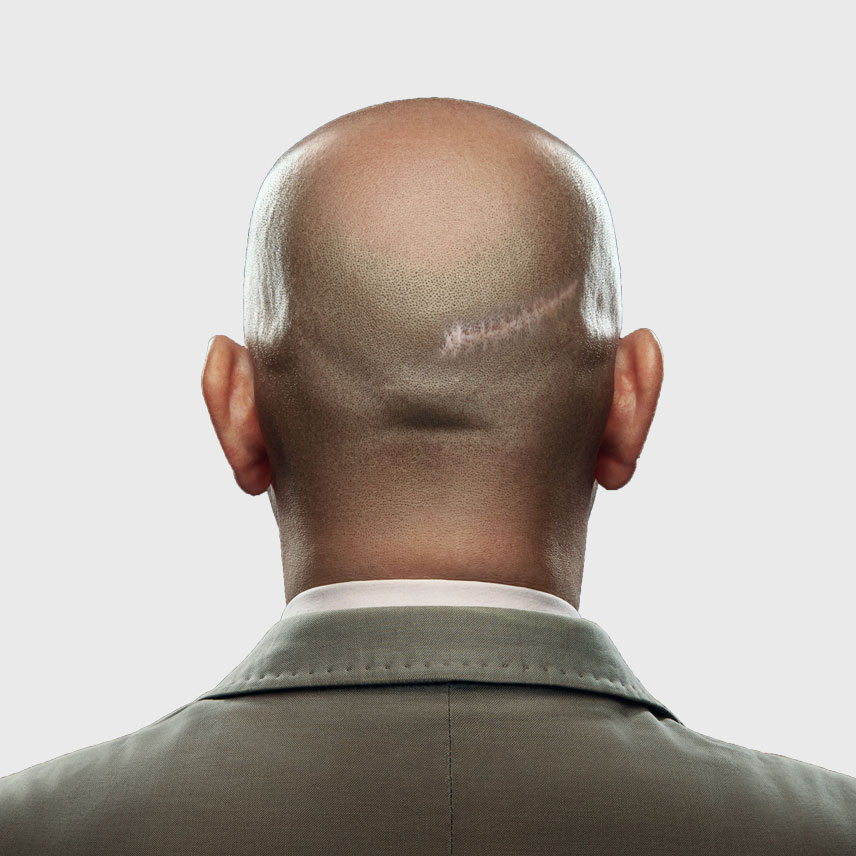
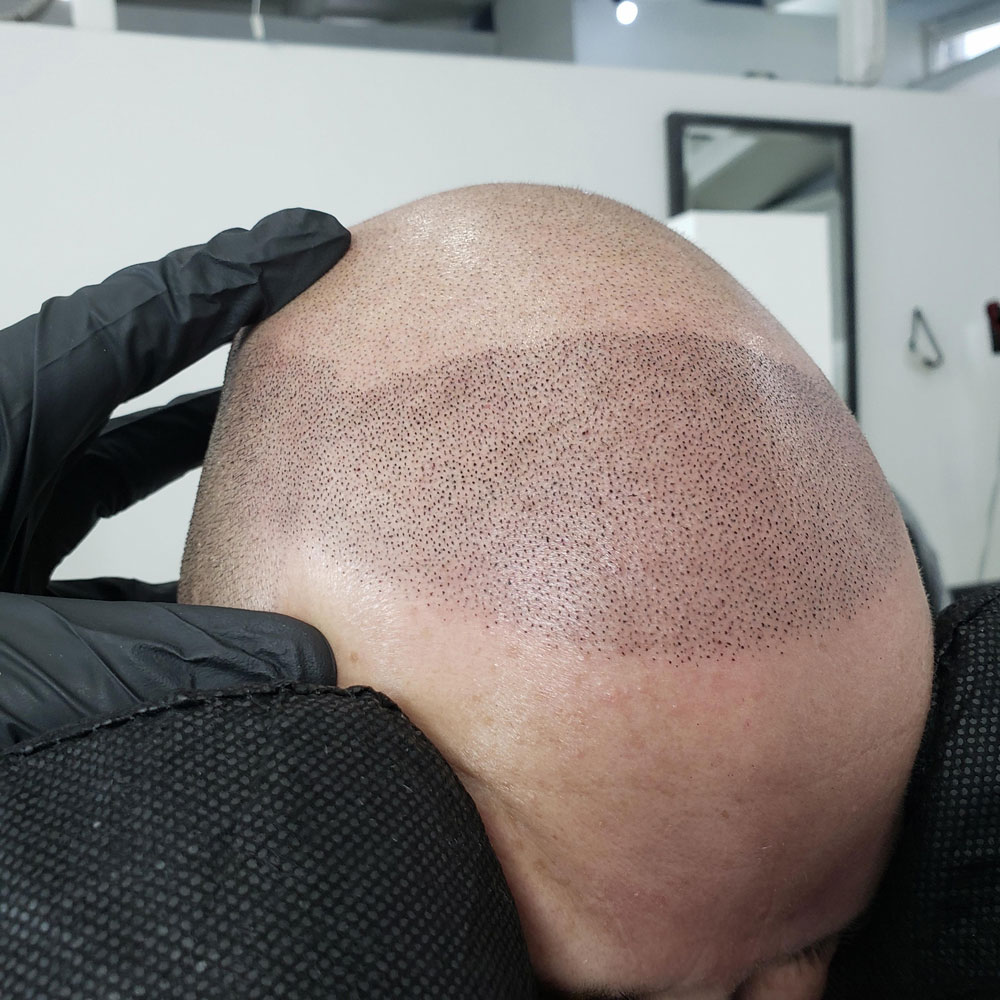
The goal with a shaved head SMP result is to replicate the look of a freshly cropped scalp: tight, uniform follicle impressions across the entire head, with enough density that the eye reads it as natural hair. Achieving that convincingly takes time, and not just because of the hours in the chair.
Medical micropigmentation deposits pigment at the epidermal-upper dermal interface, typically 1.5 to 2 millimetres into the dermis. In the days after each session, the skin heals and a portion of the surface pigment clears as the epidermis turns over. What remains settles and stabilises, revealing the true healed tone of that session’s work. Without seeing the healed result, it is not possible to accurately judge where to build next, how much density to add, or whether the colour needs adjusting. Working blind in a single marathon session would produce inconsistent depth and a result that looks flat rather than dimensional.
There is also a biological limit to how much the scalp can absorb in one appointment. Pigment dot density begins at around 40 dots per square centimetre in an initial session and builds towards 80 to 100 dots per square centimetre across subsequent sessions. Trying to compress that progression into one visit causes the dots to bleed into each other, producing a muddy, smudged appearance instead of the crisp, stippled pattern that makes a shaved head result look convincing at close range.
What is deposited in each session
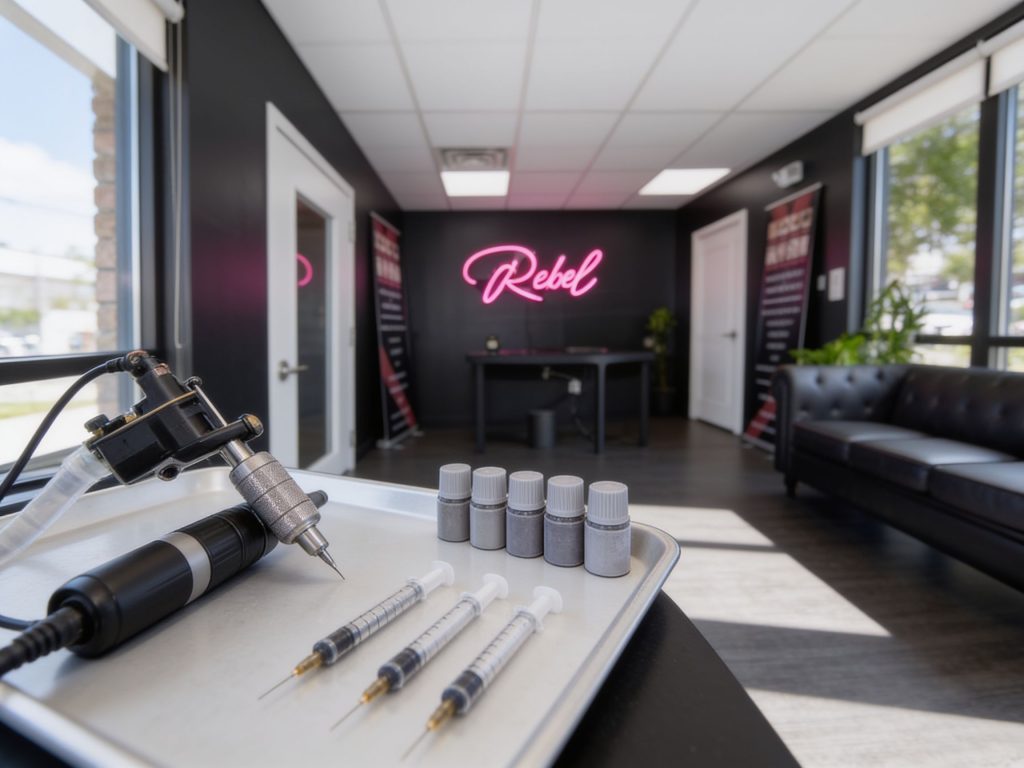
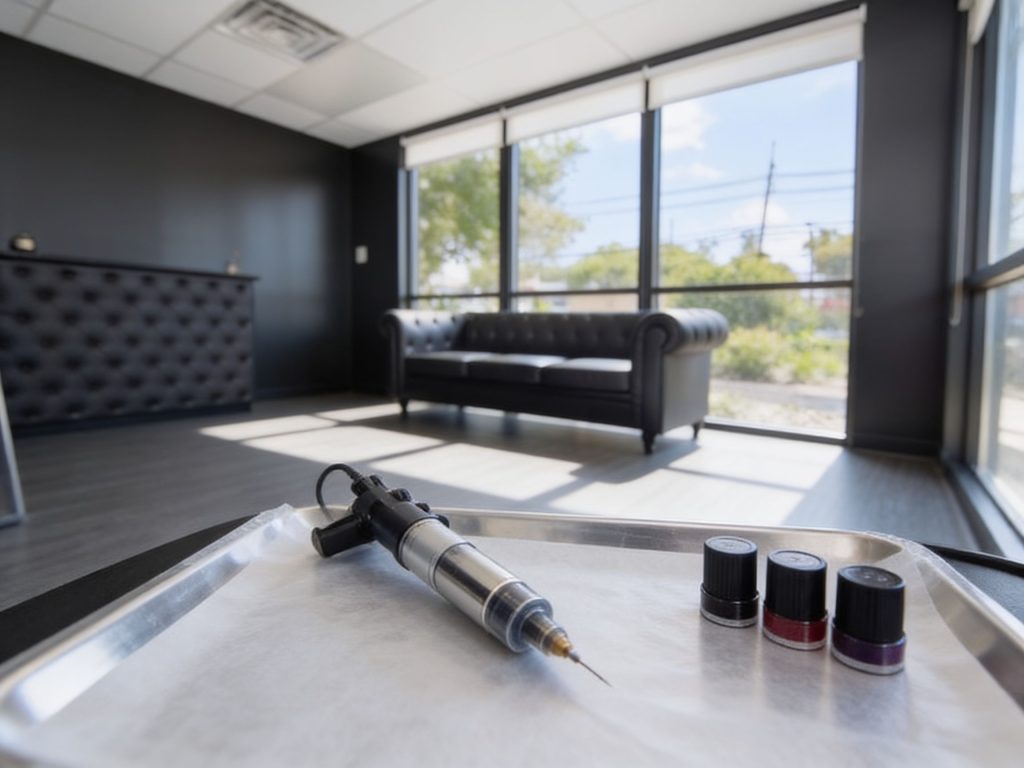
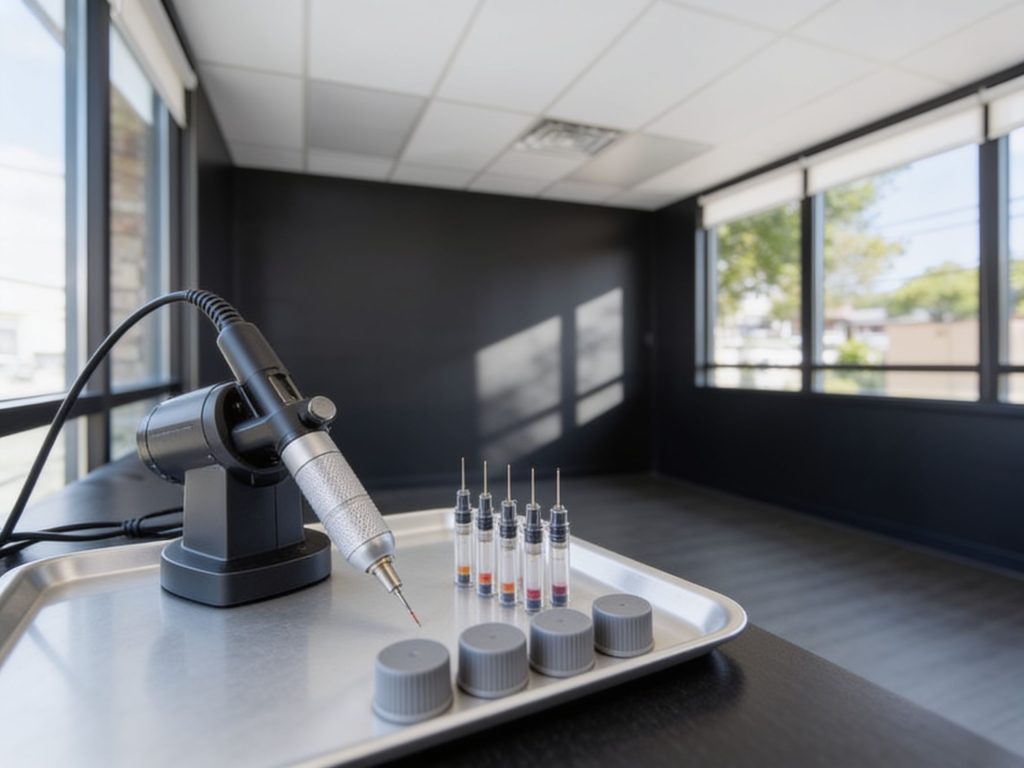
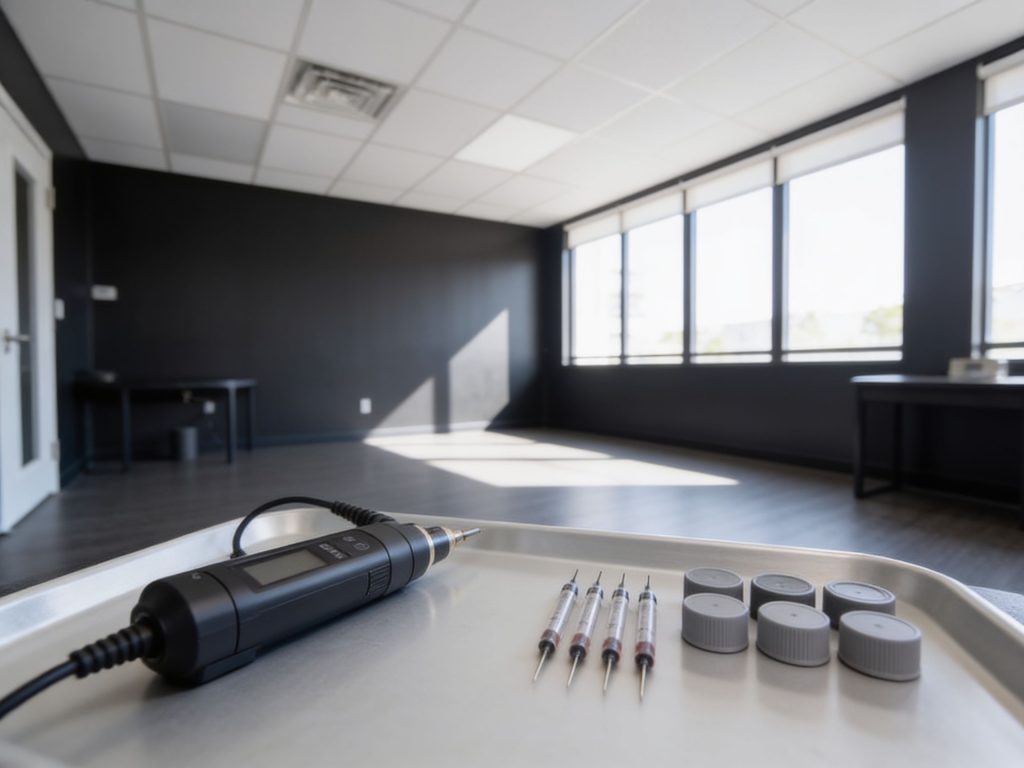
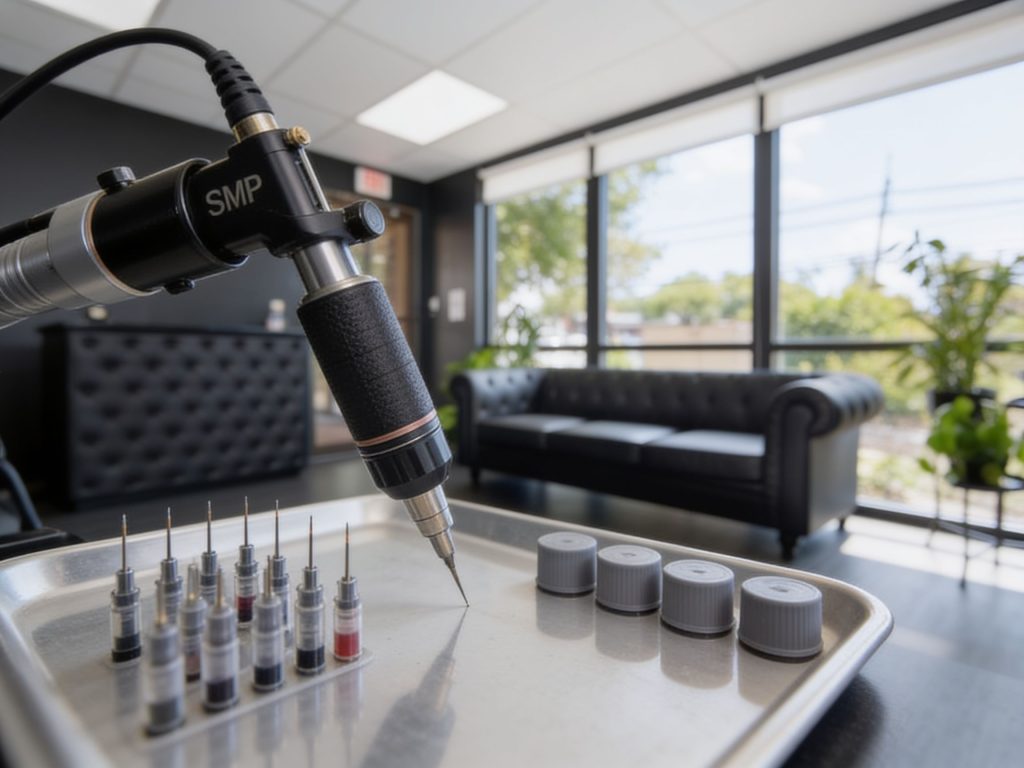
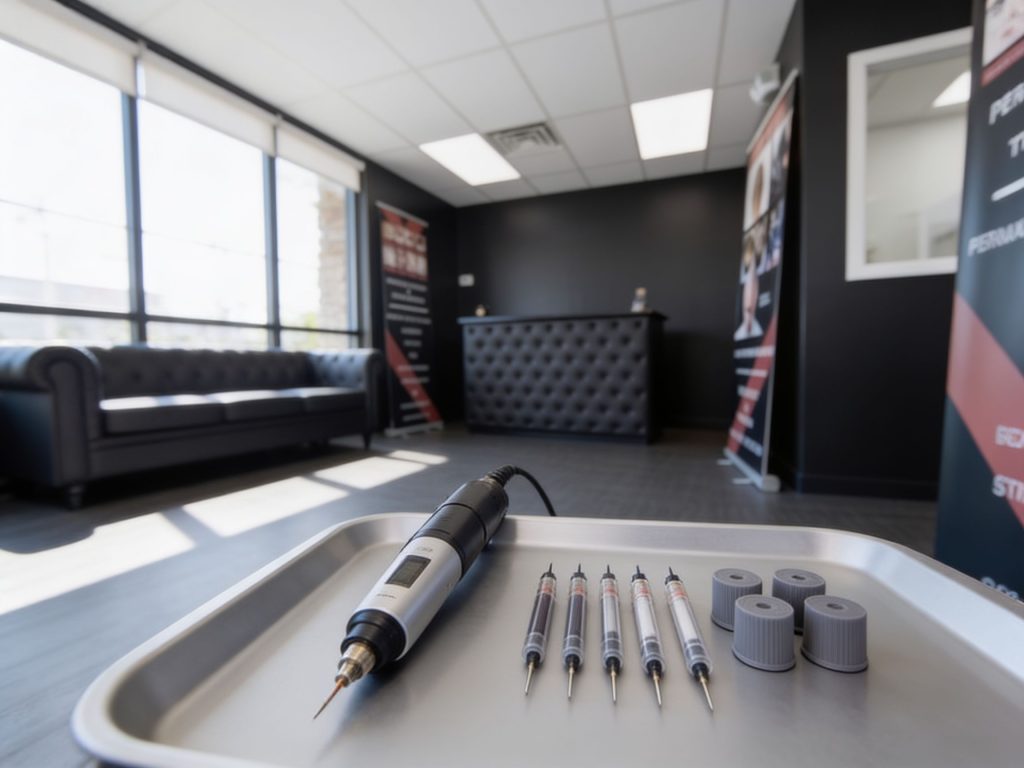
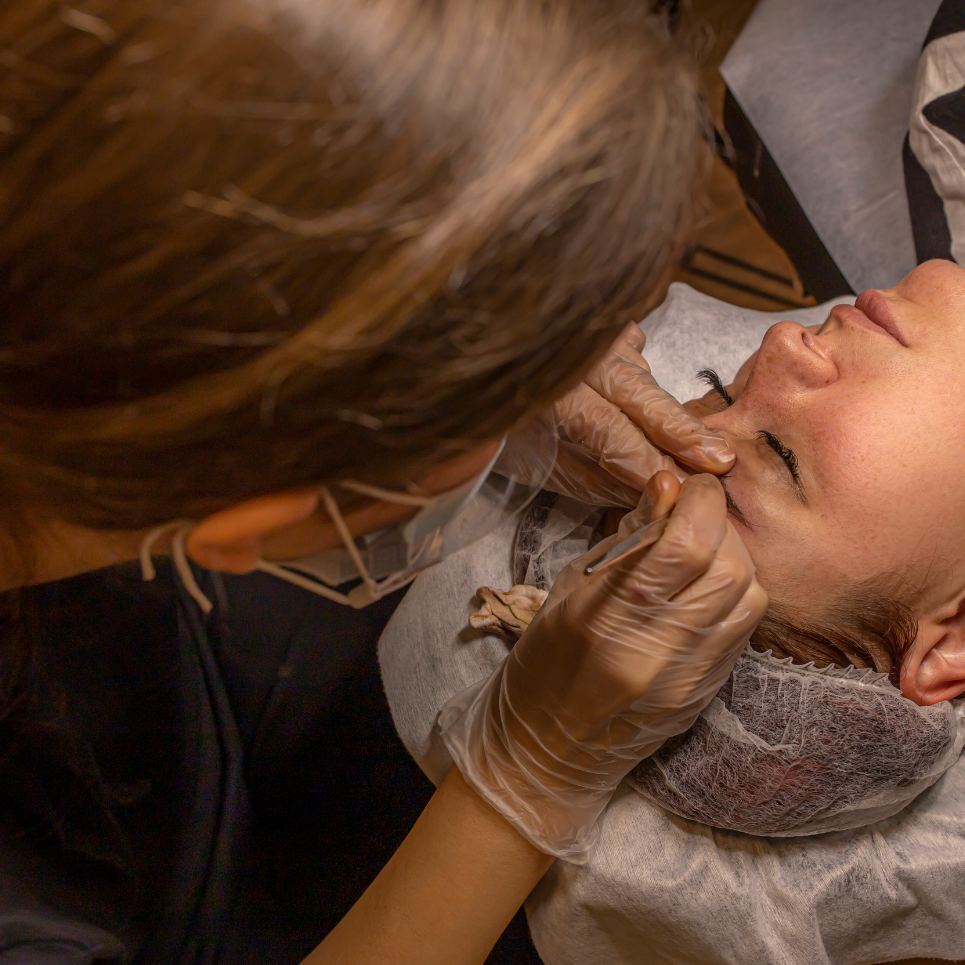
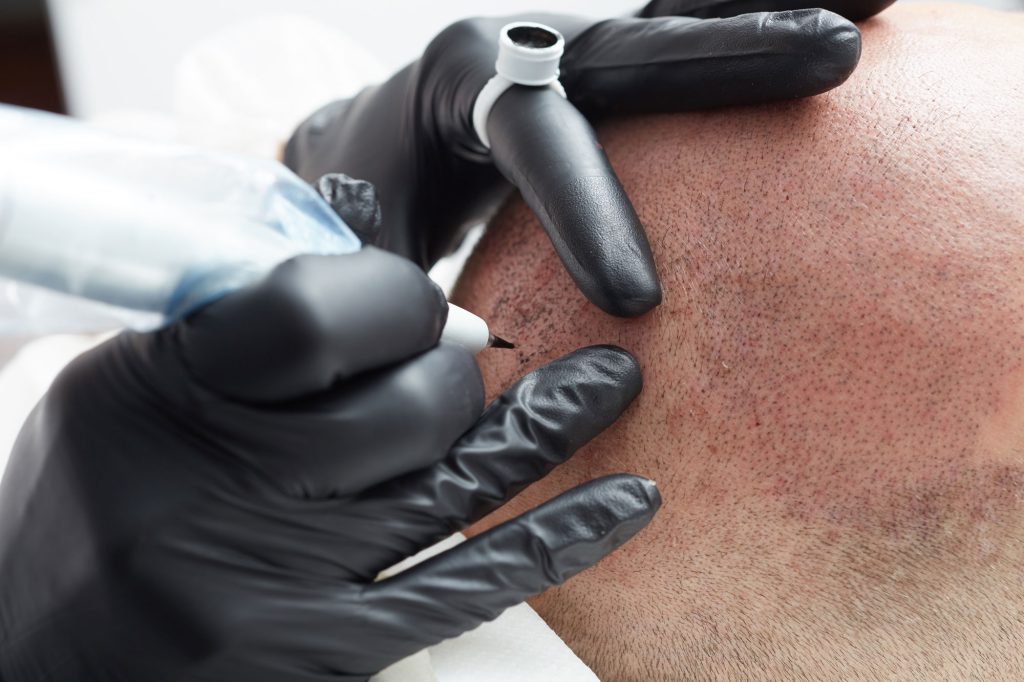
Session one is about laying the foundation. The hairline is mapped, the shape and density level are agreed upon, and the initial layer of pigment is placed across the entire treatment area. Needle selection is zone-specific: a 0.2 mm single-point needle along the hairline border for precision, and a 0.25 mm triple-point needle across the vertex, temporal, and occipital regions for efficient, consistent coverage. By the end of session one, there will be visible coverage, but the result will look lighter than the finished outcome. That is intentional.
Session two, typically four to six weeks later, works over the healed base. Once it is clear exactly how the pigment has settled, the second layer of density is built, the tone is deepened where needed, and the hairline definition is refined. This is where the result starts to look genuinely three-dimensional. The contrast between the scalp skin and the pigment dots sharpens, and the overall impression of a closely cropped head of hair becomes much more convincing.
Session three, where it is needed, is finishing work. It addresses any areas where the pigment absorbed unevenly, increases density in specific zones, or fine-tunes the hairline. Not every client requires a third session. Some people’s skin holds pigment extremely well after two visits and the result is complete. Others, particularly those with oily skin, scarring alopecia, or faster cellular turnover, will benefit from the additional pass. This is assessed at the session two review, never in advance.
Why four to six weeks between sessions is the non-negotiable window
The four to six week spacing between SMP sessions is not arbitrary. It reflects two biological realities happening simultaneously in your scalp.
First, full healing takes approximately 30 days. Initial redness settles within two to three days, but the deeper dermal pigment continues stabilising and settling throughout the first month. Returning before healing is complete means working on skin that has not yet shown its true healed colour, which makes accurate density assessment impossible.
Second, the epidermal pigment deposited in any session clears within approximately 27 days via natural stratum corneum turnover. What remains after that point is the stable dermal layer, which is the layer built upon in the next session. Coming back too early, before that clearing has occurred, risks overworking the area and producing pigment that appears oversaturated or bleeds at the edges.
Waiting beyond eight weeks is not harmful, but it does push out the timeline to the finished result. For most clients, the four to six week window strikes the right balance between adequate healing and a manageable overall treatment period.
How density and dimension are built across the full treatment
A common misconception is that each SMP session simply adds more of the same thing. In practice, the approach across sessions is deliberately varied to create the layered, dimensionally realistic result that a shaved head look requires.
In the first session, the priority is consistent base coverage and establishing the hairline architecture. The pigment tone is chosen to sit slightly lighter than the target finished colour, because pigment always appears darker immediately after placement and lightens as it heals.
By session two, there is more information to work with. The healed dot distribution is visible, any areas of uneven absorption can be identified, and the second layer is placed at a slightly increased density. The pigment tone may also be adjusted at this point if the healed result is reading lighter or cooler than intended. This is normal, and it is precisely why the multi-session model exists: it provides the opportunity to correct and refine rather than being locked into a result after a single visit.
The final session, where applicable, adds the last layer of density and any hairline detailing that makes the result look lived-in rather than drawn on. The difference between a two-session and three-session shaved head result is not dramatic for every client, but for those with larger coverage areas or more pronounced skin-pigment contrast, that third pass is what takes the work from good to seamless.
Aftercare plays a significant role in how well the result holds across all sessions. For the first four days after each appointment, the scalp needs to stay dry: no washing, no swimming, no exercise that causes sweating, and no shaving. From day five to ten, gentle cleansing is fine, but sun exposure should be avoided. From day ten onwards, applying SPF 30 to 50 daily to the scalp is one of the most important long-term maintenance habits to establish. UV exposure is the primary driver of pigment fading, and consistent sun protection will extend the life of the result significantly before any touch-up treatment is needed, typically every three to five years.
Frequently Asked Questions
How many SMP sessions does a shaved head result typically require?
Most clients require two to three SMP sessions to achieve a completed shaved head result. Two sessions are sufficient for many people, while a third is used for refinement where skin absorbed pigment unevenly or where greater density is needed across larger coverage areas. This is assessed after session two has fully healed.
Why is there a waiting period between SMP sessions?
The four to six week gap between SMP sessions allows the scalp to complete its healing cycle. Epidermal pigment clears within approximately 27 days via skin turnover, leaving the stable dermal layer visible. Returning before this point means the practitioner cannot accurately assess the healed result or make precise density and colour adjustments for the next session.
What does an SMP session for a shaved look actually involve?
Each SMP session involves placing medical-grade pigment into the scalp using zone-specific needles: a 0.2 mm single-point needle along the hairline border and a 0.25 mm triple-point needle across the vertex and sides. Sessions last one to five hours depending on coverage area. The practitioner progressively builds pigment density and colour depth across visits rather than completing everything in one appointment.
Will the result look finished after just one SMP session?
After session one there will be visible coverage, but the result will appear lighter than the finished outcome. This is deliberate: pigment is placed at a lower density to allow the practitioner to assess how the skin holds colour before building further. A convincing, dimensionally realistic shaved head result requires at least two fully healed sessions to achieve.
How long does a completed shaved head SMP result last before needing a touch-up?
A completed shaved head SMP result typically lasts three to five years before a touch-up appointment is needed, though some results hold well for up to eight years. Longevity depends on skin type, sun exposure, and aftercare habits. Applying SPF 30 to 50 daily to the scalp is the most effective way to slow pigment fading between touch-up treatments.