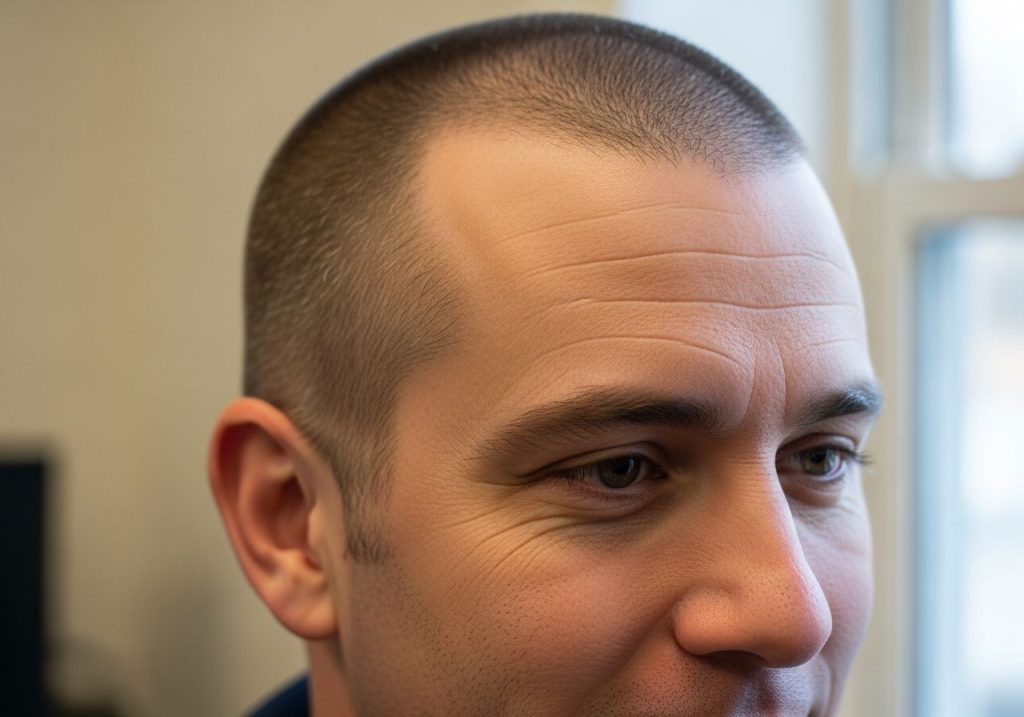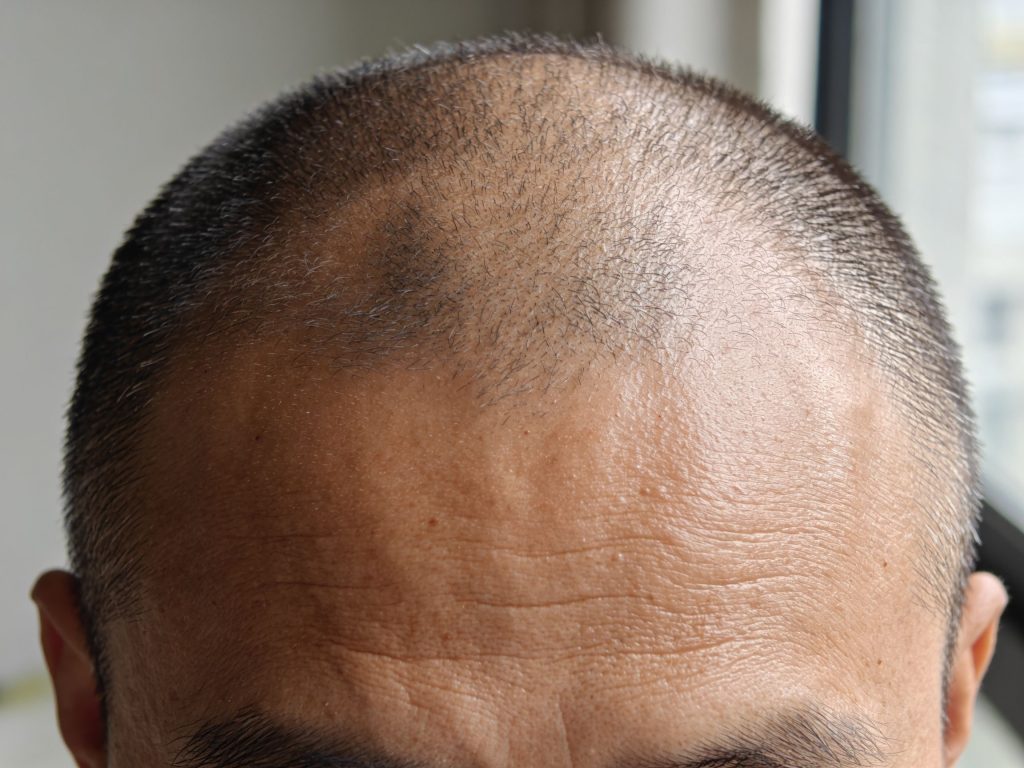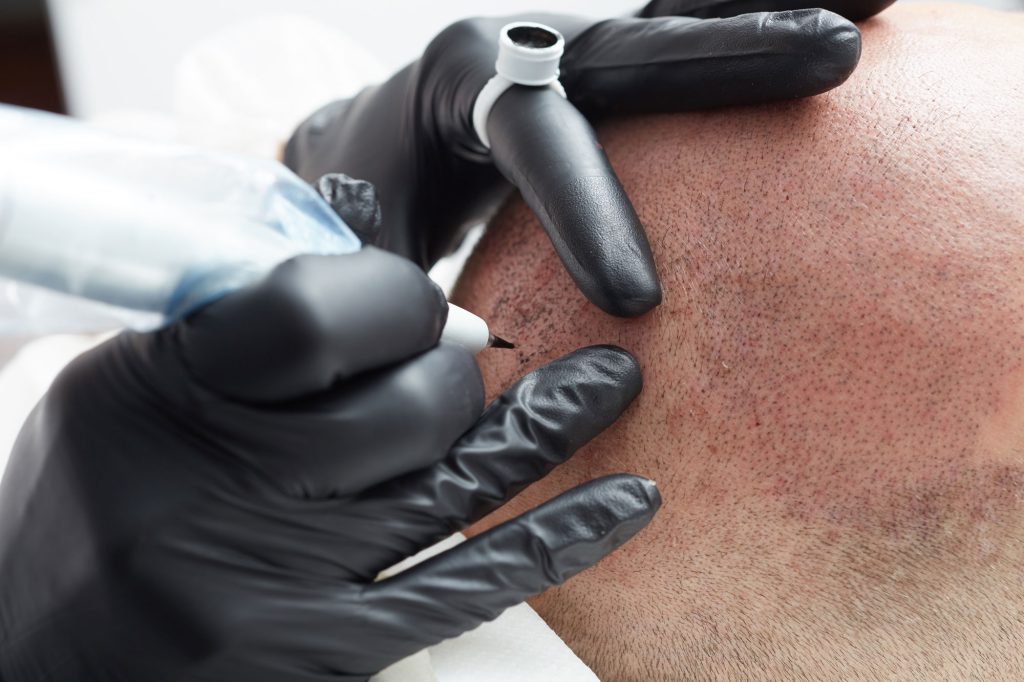
You had a hair transplant years ago, and the technology has moved on faster than your scalp has. Those round, doll-hair plug scars from older procedures are among the most visible reminders of an era when surgical options were far more limited. SMP can significantly reduce that visibility, but there are things you need to understand before you book a session.
1. Plug scars are a specific challenge, even among transplant scars
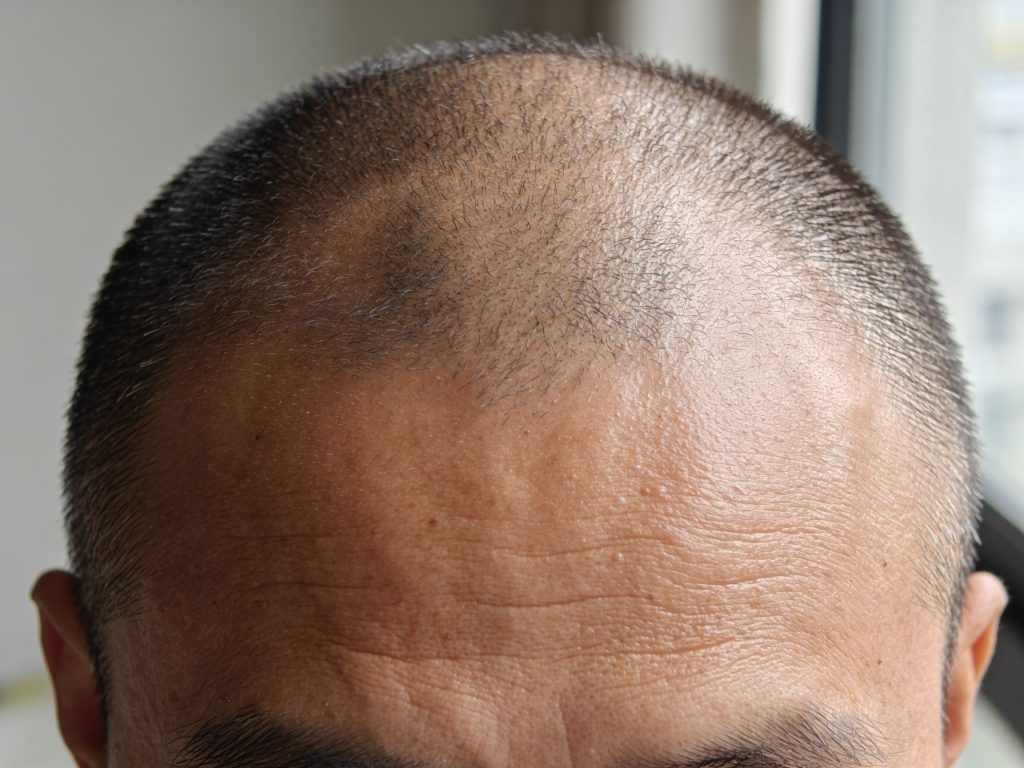
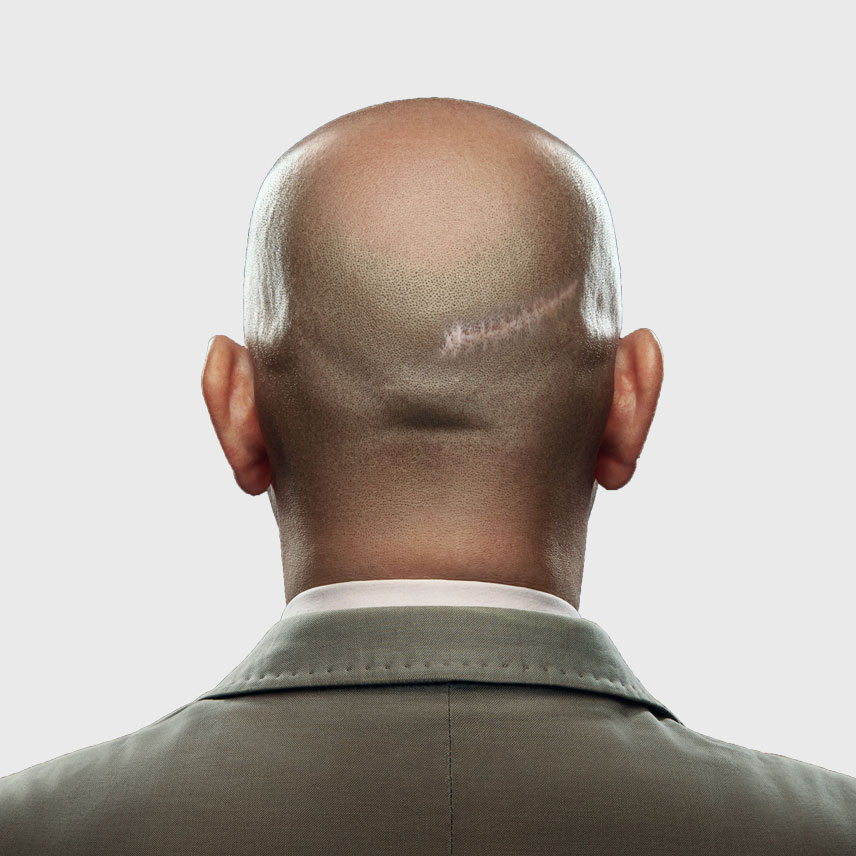
Not all hair transplant scars behave the same way under SMP. FUE dot scars are the most straightforward to conceal. FUT strip scars run longer but sit in a predictable line. Vintage transplant scars from plug procedures are a different story: they tend to be raised, clustered, and irregular in both shape and skin texture.
That unpredictability matters because SMP deposits pigment into the skin. If the scar tissue is dense or fibrous, it can resist pigment, absorb it unevenly, or push it back out during healing. The more irregular the surface, the more sessions and precision the work requires. Experienced SMP artists treat this as a distinct skill set, not a variation on standard scalp work.
2. Completely invisible results are not the goal
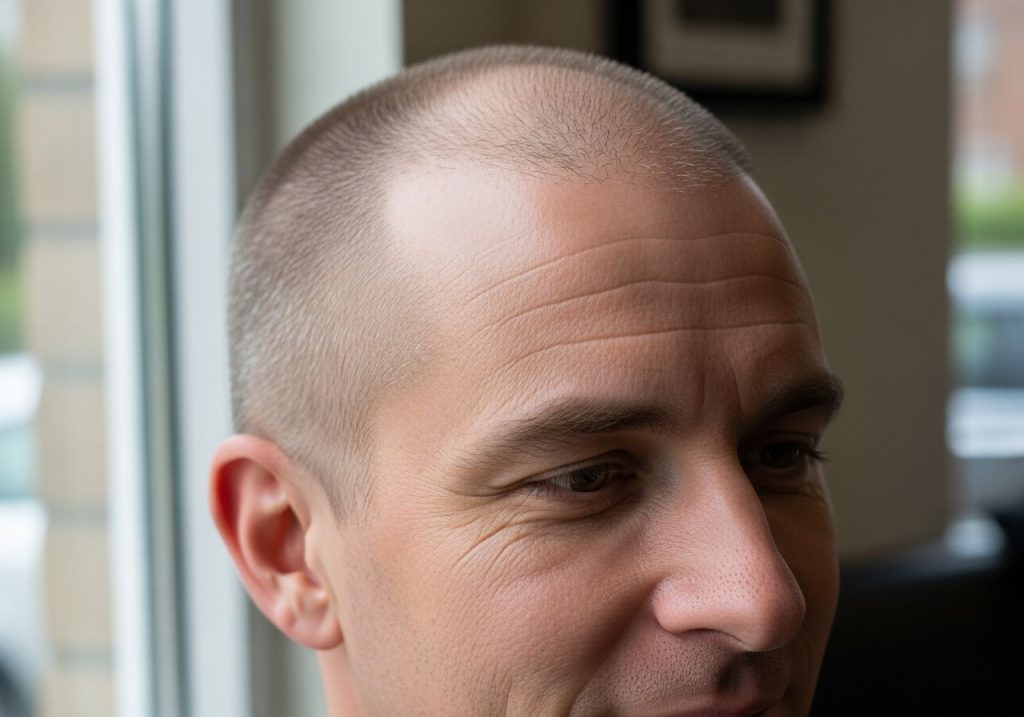
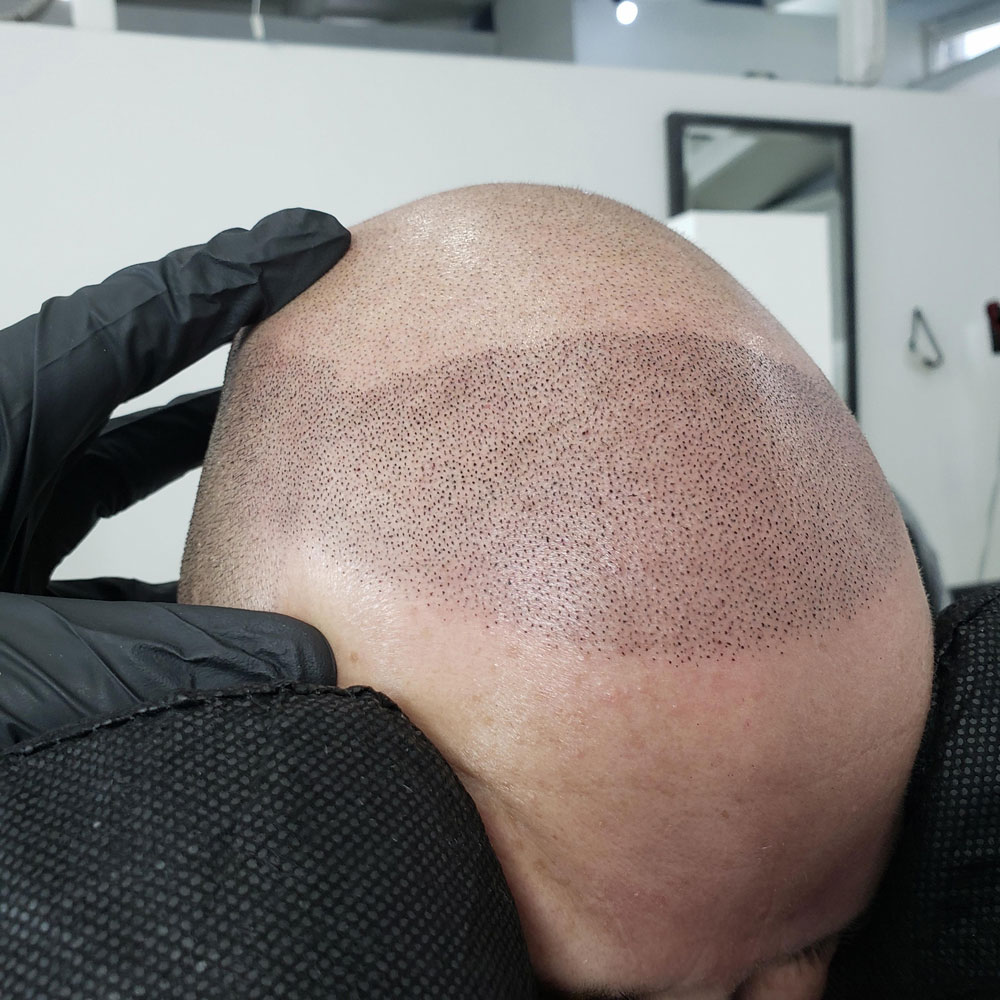
To be straightforward with you: scar camouflage is never 100% effective. That applies to every scar type, and old hair transplant plug scars are no exception. What SMP realistically achieves is a significant reduction in contrast between the scar and the surrounding scalp, typically around 85% improvement on scars that are fully healed and relatively flat.
The goal is to make the scar far less noticeable in normal lighting and at normal social distances, not to make it disappear entirely. For most clients, that shift is genuinely life-changing. Going in with calibrated expectations, however, protects you from disappointment and ensures you can judge the outcome fairly.
3. The condition of your scar tissue determines how much SMP can do
Flat, fully healed scars with consistent skin colour and texture respond best to SMP. Raised or keloidal plug scars are more resistant. Scars that are still changing, recently revised, or surgically touched up need to be fully settled before treatment begins, which can mean waiting 12 months or more after any procedure.
Skin tone also plays a role. Darker skin tones can carry more visible contrast around plug scar edges, which actually makes the improvement from SMP more dramatic when the work is done well. Lighter skin tones can be more forgiving of texture variation. A thorough consultation should assess your specific scar characteristics before any commitments are made.
4. Only a highly experienced SMP artist should attempt this work
Scar camouflage is one of the most technically demanding applications of SMP. Plug scar work specifically requires an artist who understands how compromised skin behaves differently from healthy scalp tissue, how to layer pigment gradually across multiple sessions, and how to match the surrounding hairline density convincingly.
An artist who only performs standard scalp density or hairline work has not necessarily developed the precision needed for vintage transplant scars. Ask directly about their scar-specific experience and request before-and-after examples of plug or large dot scar work. This is not a service to choose on the basis of price alone.
5. Multiple sessions are standard, and patience is part of the process
Most plug scar camouflage requires a minimum of two to three SMP sessions, spaced several weeks apart. The first session lays the foundation. The second assesses how the scar tissue has retained pigment and adjusts density and tone accordingly. A third session may refine edges, blend surrounding areas, or address any patches where pigment has faded unevenly.
Rushing the process produces worse outcomes. Scar tissue heals more slowly than healthy skin, and the layering approach is deliberate. The wait between sessions is not a delay; it is part of the treatment. Clients who allow the full process to unfold consistently achieve better, longer-lasting results than those who try to compress the timeline.
Plug scars from older transplant procedures do not have to define how your scalp looks. With the right artist, realistic expectations, and a properly healed scar, SMP offers a meaningful and lasting improvement to hairline appearance and overall confidence.
Frequently Asked Questions
Can SMP fully conceal plug scars from an old hair transplant?
SMP cannot fully conceal plug scars, but it can reduce their visibility by approximately 85% in ideal conditions. The best results occur on flat, fully healed scars with consistent skin texture and colour. Raised, fibrous, or recently revised scar tissue will respond less predictably, and multiple sessions are usually needed.
How are plug scars different from FUE or FUT scars when it comes to SMP?
Plug scars from vintage transplant procedures tend to be clustered, raised, and irregular in texture, making them more complex to treat than FUE dot scars or a single FUT strip. The uneven surface can cause pigment to absorb inconsistently, so more sessions and a higher level of artist experience are typically required.
How many SMP sessions will I need for plug scar camouflage?
Most plug scar camouflage treatments require two to three SMP sessions, spaced several weeks apart. Scar tissue retains pigment differently from healthy scalp skin, so a gradual layering approach produces better results. Attempting to complete the work in a single session typically leads to uneven colour and shorter-lasting outcomes.
How do I know if my plug scars are ready for SMP treatment?
Your scars should be fully healed, stable in colour, and flat or close to flat before SMP begins. If you have had any surgical revision, additional transplant work, or scalp reduction recently, wait at least 12 months before consulting an SMP artist. A qualified practitioner will assess the scar tissue in person before confirming suitability.
Does skin tone affect how well SMP works on old hair transplant plug scars?
Yes. Darker skin tones often show higher contrast around plug scar edges, which can actually make the improvement from SMP more visually dramatic when executed well. Lighter skin tones tend to be more forgiving of texture variation. Regardless of tone, pigment matching and gradual layering are essential to achieving a natural-looking result.